Padam Gurung:
Kathmandu, 19 May: The endangered Ghatu dance is considered a cultural treasure of the Gurung community. It is still performed in Gurung-majority villages like Sribhanyang, Ghalegaun, Siurung, Singdi, Karapu, Bhujung, Gilung, Bhulbhule, Khudi, Taghring, Ghermu, Hiletaksar, Phaleni, Dhodeni, Dhagai, Pachok, Pyarjung Gauda, Ilampokhari, Dudhpokhari, and Khasurgaun in Lamjung district.
The Ghatu dance, which begins on the full moon day of the Nepali month of Baisakh, is currently ongoing. In Gurung villages, everyone—from young girls to elderly women—can easily perform the dance. The mesmerizing Ghatu performed by these women captivates all visitors to Gurung settlements. It is also a long-standing tradition to welcome tourists to these villages by showcasing the Ghatu dance.
When guests arrive in the village, Gurung men and women hurry to the community hall, spread mats (gundri), and begin the Ghatu dance. There is a custom of starting the dance on Basant Panchami and concluding it on the fifth day after the full moon in Baisakh. Considered a priceless treasure of Gurung culture, Ghatu is a classical dance. There are two types: Sati Ghatu and Barhamase Ghatu. Sati Ghatu begins on Shreepanchami and ends on the full moon of Baisakh, while Barhamase Ghatu can be performed and sung at any time. The highlight of both forms is the Kusunda Ghatu—a Ghatu without Kusunda is considered incomplete.
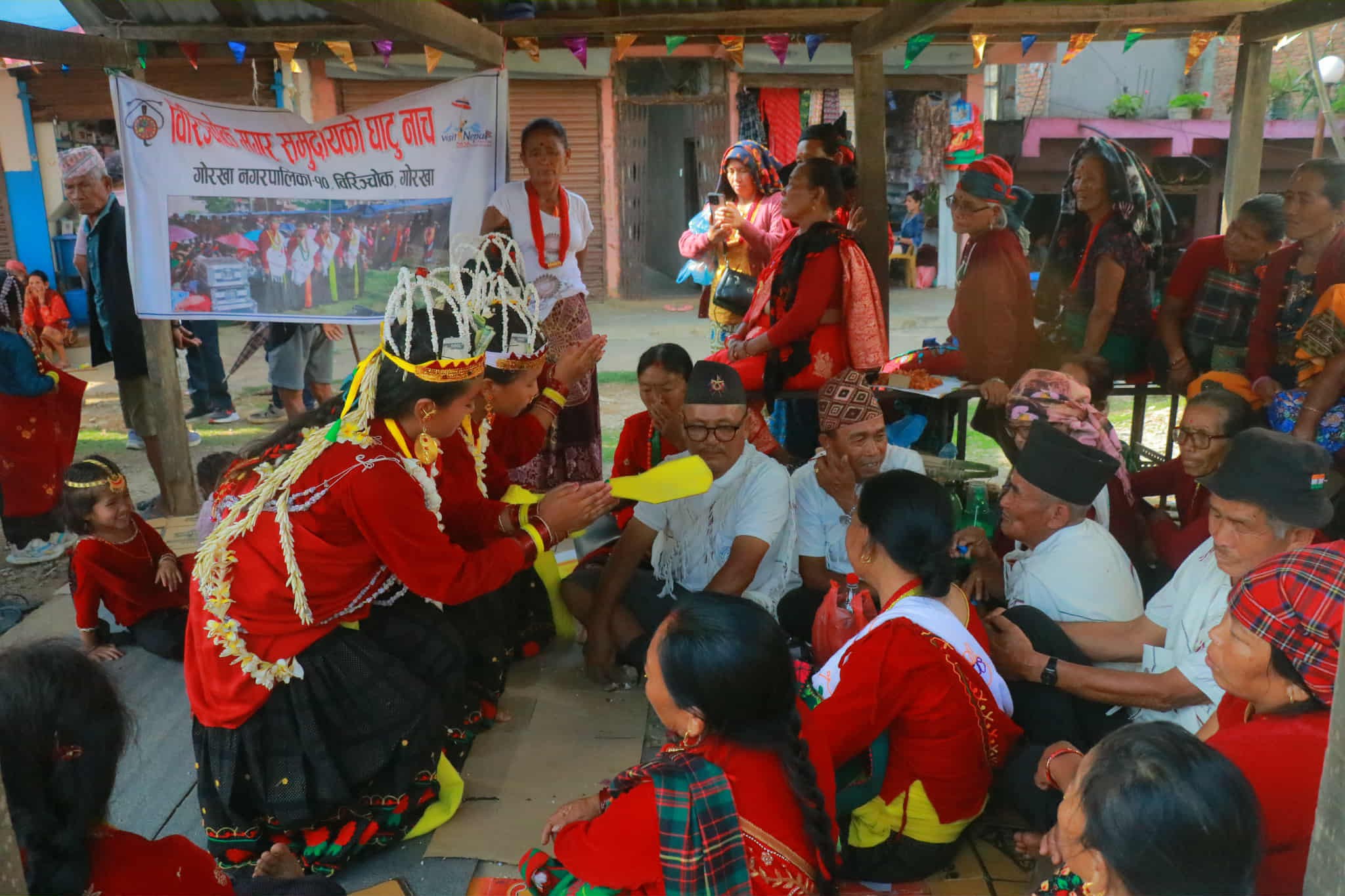
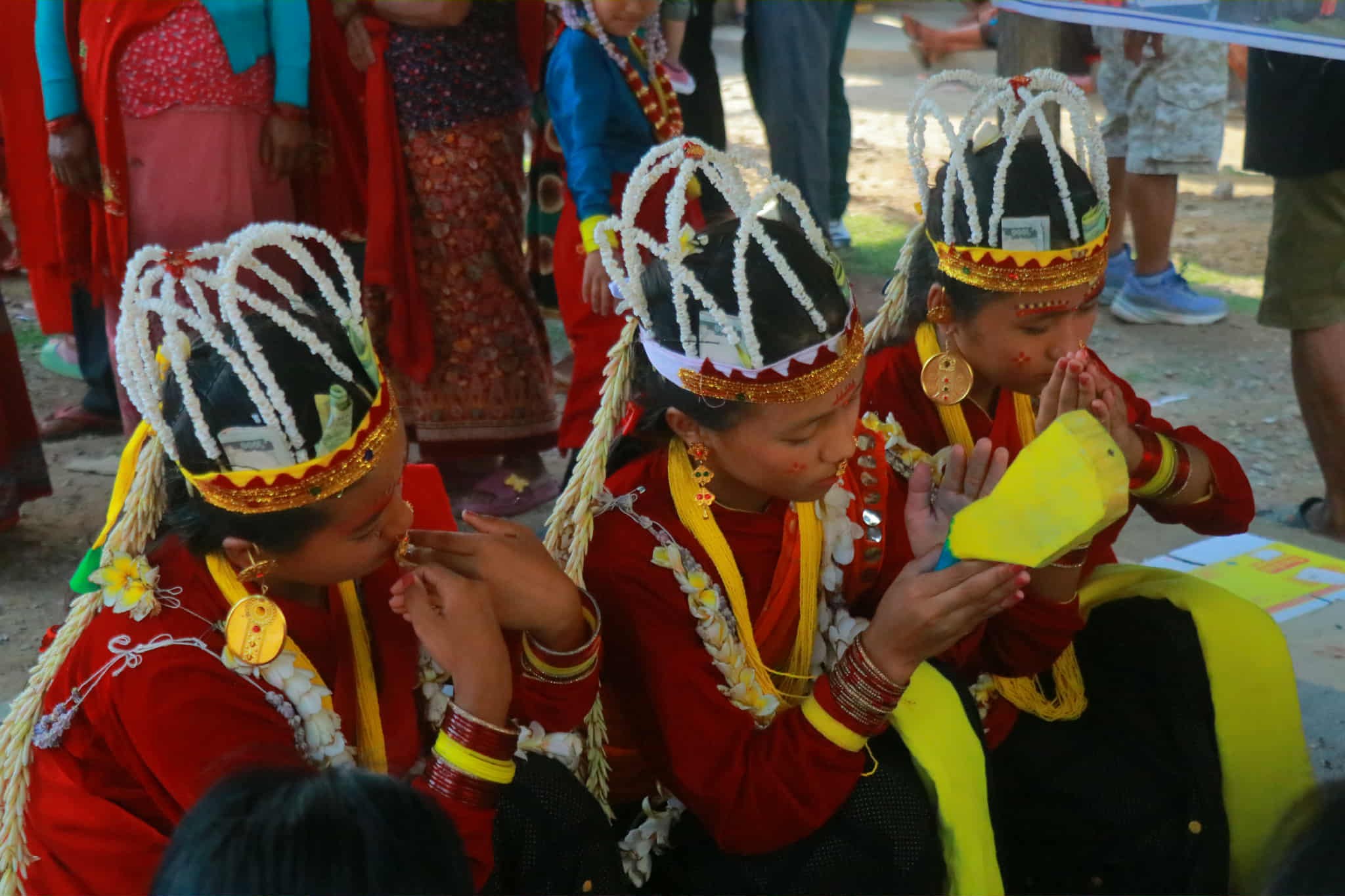
During the performance, dancers—called Ghatsari—sometimes faint while dancing to the rhythm of the song and madal (traditional drum). These unconscious dancers are revived through the continued rhythm of music. The dance typically includes at least two and up to three adolescent girls. They wear traditional lahako crown, gunyu, and choli, and two dancers represent a king and a queen.
There is no definitive or reliable explanation for how the word Ghatu originated or what it means. It doesn’t exist in the Gurung language. However, the Nepali dictionary defines it as a form of folk dance performed by Gurung girls. Some believe it is derived from the name of the goddess Ghatli, while others suggest it evolved from the term ghaito nach (pot-shaped dance), referring to the dancers’ posture.
According to Smriti Gurung of Marsyangdi Rural Municipality–3, unmarried dancers (Ghatni) offer their bangles and red hair strings worn during the three-day dance to a symbolic tomb (Chaindi in Gurung) made in the name of the Hindu sage Parashuram at the end of the performance, symbolizing widowhood.
Experts say the Ghatu dance is based on the story of King Parashuram and Queen Yamphawati. While historical records don’t mention them, the Gurung community has embraced their legend as a cultural heritage for centuries. According to cultural experts, the story, likely dating back to the 16th century in Lamjung, follows the king and queen’s marriage, love, domestic life, hunting, war, and eventual deaths.
The main themes of the Ghatu include their marriage, romance, hunting excursions, battles with other kingdoms, the king’s sacrifice for his people, and the queen’s act of sati. According to Purna Bahadur Gurung from Dhagai, tourists visiting Gurung villages often prefer watching the Ghatu.
He explains, “If the rhythm of the madal or the lyrics falter, the Ghatsari may faint. Before starting the dance, deities are invoked. The Ghatu Guru calls upon gods like Deuchuli and Himachuli, and it is believed that the deity enters the body of the Ghatsari. The dancers move to the rhythm of the madal and the Guru’s chants. If the rhythm breaks or any line is missed, the dancers are believed to faint.”
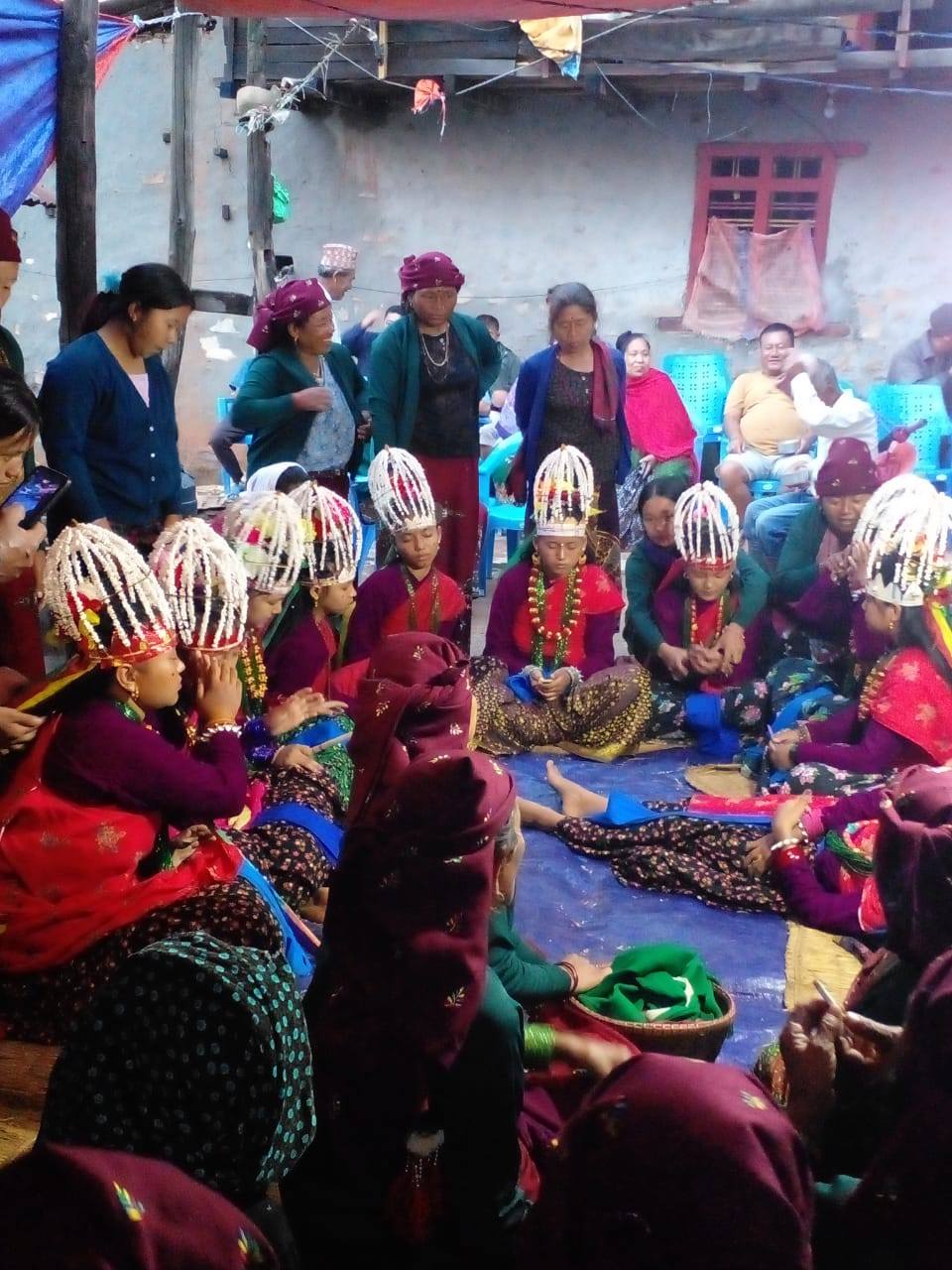
Once possessed by the deity, the Ghatsari perform in a trance-like state—this is known as Kusunda. The Ghatu songs are traditionally divided into four segments: Janmadandi (birth), Bibahadandi (marriage), Sikardandi (hunting), and Kusundadandi. These are also referred to as dandi (phases). While dance styles may vary by region, the narrative remains the same, according to Ghatu Gurus. Each dancer also has an attendant (susare). Traditionally, those performing Ghatu should not be menstruating, disabled, or physically weak.
The Ghatu is especially prevalent in Gurung villages across western Nepal, including Lamjung, Gorkha, Tanahun, Kaski, and Syangja. It is a folk dance performed predominantly by the Gurung community, but also by some Dura and Magar people in the Gandaki region.