Barcelona, 1 Jul: During his first term in office, Prime Minister KP Sharma Oli had a famous slogan: “Electricity from the wind.” Some saw it as a visionary idea, while others dismissed it as a joke. For many, the statement seemed like empty talk—unrealistic and fanciful. From social media to the parliament, it became a subject of satire and trolling.
But times have changed. Today, Oli himself is visiting Spain—a country that leads in wind energy, where nearly 25% of its electricity supply comes from wind.
After landing in Madrid, as Oli took a high-speed train to Seville, hundreds of turbines could be seen through the train window—standing tall in the fields, spinning silently. Those scenes transformed Oli’s old words from mere rhetoric into vivid reality.
Now the question arises—if it was possible in Spain, why hasn’t it happened in Nepal? The dream was envisioned, but why did the progress fall asleep?
Spain didn’t just dream; it built a strategy and acted on it. It set a goal for energy self-reliance, took the climate crisis seriously, and trusted in technology. It introduced policies to attract investment and developed infrastructure through public-private partnerships.
That is why today, Spain stands at the forefront of green energy production in Europe.
Nepal also has wind, favorable geography, recorded wind speeds, and feasibility studies. But what’s lacking is policy-level willpower. There is no investment-friendly environment. The dream was dreamt, but it fell asleep before it could awaken.

Spain’s Leap in Wind Energy
According to the International Energy Agency (IEA), there are currently 1,345 wind farms operating across more than 800 municipalities in Spain, with a total of 22,042 wind turbines. These turbines occupy only about 0.017% of the country’s total land area.
In Spain, wind energy has surpassed solar and nuclear sources to become the most prominent form of renewable energy. In 2023, wind energy accounted for more than 24% of the country’s total electricity demand.
With an installed capacity of over 30,000 megawatts, Spain now ranks fifth in the world and second in Europe for wind energy production.
Talking About ‘Rail’
Just like “electricity from wind,” “railways” was another one of Oli’s widely discussed dreams. In Nepal, this vision received much criticism and mockery. But this time, Oli actually rode that very kind of train—in Spain—a high-speed rail covering nearly 530 kilometers from Madrid to Seville in just 2 hours and 30 minutes.
A train equipped with low noise, high safety, and advanced technology. It was a powerful reminder of how far the world has moved ahead compared to the dreams shown to the Nepali people.
Perhaps while riding that train, a question echoed in Oli’s mind—“Why didn’t the dream I envisioned come true?” Dreaming is not empty talk, but forgetting the dream is unfortunate.
Both wind energy and railways are technologies that require planning, investment, and dedication. However, the problem in Nepal lies not only in leadership but also in the system. Initiated plans lacked continuity, and resources and means could not be effectively mobilized.
Diplomatic Moment
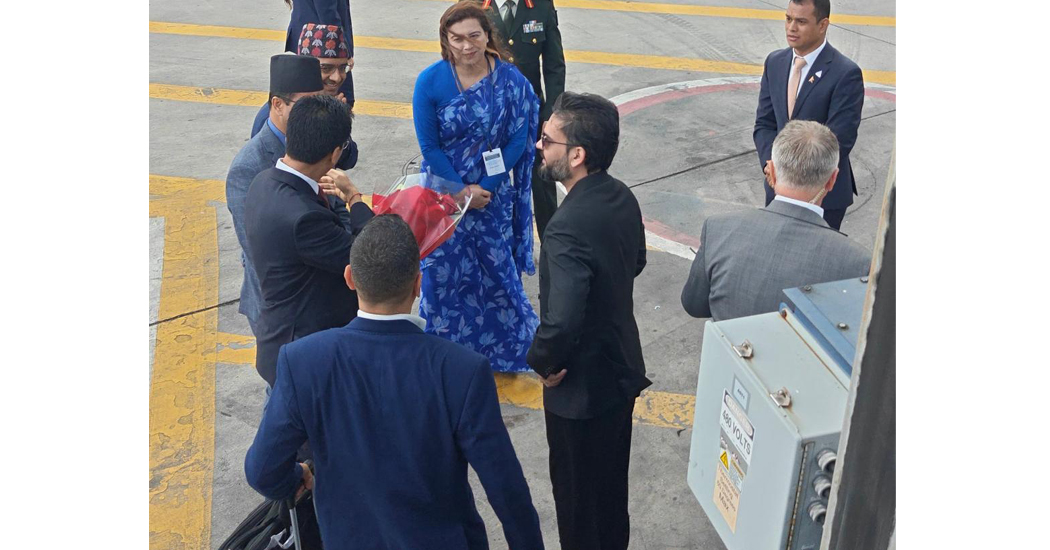
Prime Minister Oli’s visit to Spain is not just about attending conferences—it’s also an opportunity for self-reflection. The turbines turning outside the window reminded him that a country changes not through words, but through actions. That dream still holds the potential to be transformed into reality through action.
The door has opened for cooperation with Spain in tourism, climate, trade, and infrastructure. From technology transfer to green energy investments, these matters must now advance seriously. But for that, the country needs leadership that can steer strategy—not leaders who merely admire the spinning turbines and return.
Turbines generate energy, but the energy to build a nation comes from vision. The phrase “electricity from the wind” remains fresh today—whether as a subject of criticism or inspiration. Now is the time to awaken that dream once again—with planning, investment, policy will, and international cooperation.