The tariff policy announced by U.S. President Donald Trump came into effect starting Thursday. Speaking at a White House press conference, Trump described the decision as essential for protecting America’s security and industry. CNN reported that this policy will have a profound impact on the global supply chain, pricing networks, and diplomatic relations worldwide.
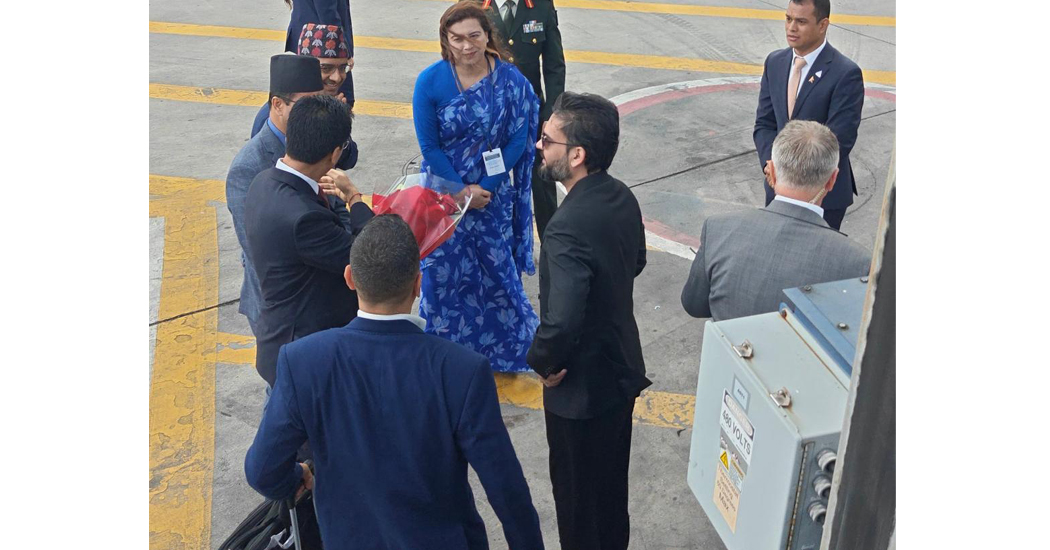
According to Trump’s new tariff list, South Asian countries Nepal, Maldives, and Bhutan are not included. However, a minimum customs duty of 10 percent will be imposed on Nepali goods.
Controversial decisions from the start
Since being elected for his second term, President Trump has been at the center of controversy due to his decisions. Whether domestically or internationally, he has been making daily decisions that attract global attention—not in a positive way, but rather as signs of erratic behavior. His current “tariff diplomacy” with powerful world nations has even earned him the reputation of an unpredictable ruler.
Analysts have warned that his decisions since taking office could cause disruption not only in global economics and politics but also within the country itself. At the very beginning of his second term, Trump announced heavy taxes on foreign goods. This had an immediate effect on the U.S. stock market at the time, raising concerns among Americans about inflation and the impact on business transactions.
Because of this fear, investors rushed to sell shares, causing a sharp drop in the U.S. stock market. Market indexes like the Dow Jones, S&P, and Nasdaq fell by more than 100 percent within two days. Such a decline in the U.S. stock market had only been seen before during the coronavirus pandemic in March 2020. Due to the market crash and public criticism, Trump suspended his tariff policy for three months.
Now, Trump’s “tariff attack” has resumed. Analysts have warned that this move, which began on August 9, could again heavily impact the U.S. market. His campaign to impose tariffs worldwide also increases the risk of a global economic recession.
According to estimates from the Budget Lab at Yale University, the average tariff rate in the U.S. has reached 18.3 percent — the highest in over a century. Previously, in 1909, the U.S. average tariff rate was 21 percent.
Because of the higher tariffs, American families will have to bear an additional average expense of $2,400 this year. In other words, goods that previously cost $100 will now cost $118.30. According to economist Wedong Zhang from Cornell University, the prices of materials using steel and aluminum will rise in the coming days in the U.S. The Budget Lab estimates that the current tariff policy could reduce the U.S. GDP by up to 0.5 percent. This means the American economy, valued at about $28 trillion, could suffer a loss of $140 billion in a single year.
Similarly, according to the Tax Foundation, tariffs will directly affect everyday food items. Prices of fruits, fish, meat, and alcoholic beverages are expected to increase as well. Although Trump claims that his tariff policies will strengthen the U.S. economy, analysts warn that such policies will lead to higher inflation and unemployment. Government data shows that 73,000 Americans lost jobs in July alone. The government estimates a net gain of 190,000 jobs, but May and June also saw significant job losses. Over the three-month period, the average number of new jobs was only 35,000 — the lowest since 2010.
Angered by these statistics, Trump fired Erica McEnterfer, Commissioner of the Bureau of Labor Statistics, on August 1. Trump accused her of political motives behind the reports. She had been appointed by former President Joe Biden in 2024.
The threat of a ‘trade war’
Since taking office for his second term, Trump’s unpredictable decisions have challenged the world. Although some reactions have come, no country has yet been able to confront him decisively. Whenever there is a threat, Trump quickly changes his policies. However, his current “tariff attack” will not stop anytime soon. Once known for threatening with weapons, America now threatens the entire world through its tariff policies. If America continues imposing tariffs one after another, other countries will no longer remain silent. This increases the risk of trade wars between nations. So far, retaliatory tariffs on American goods have not started, but it is unlikely that the process to pressure the U.S. will not begin soon.
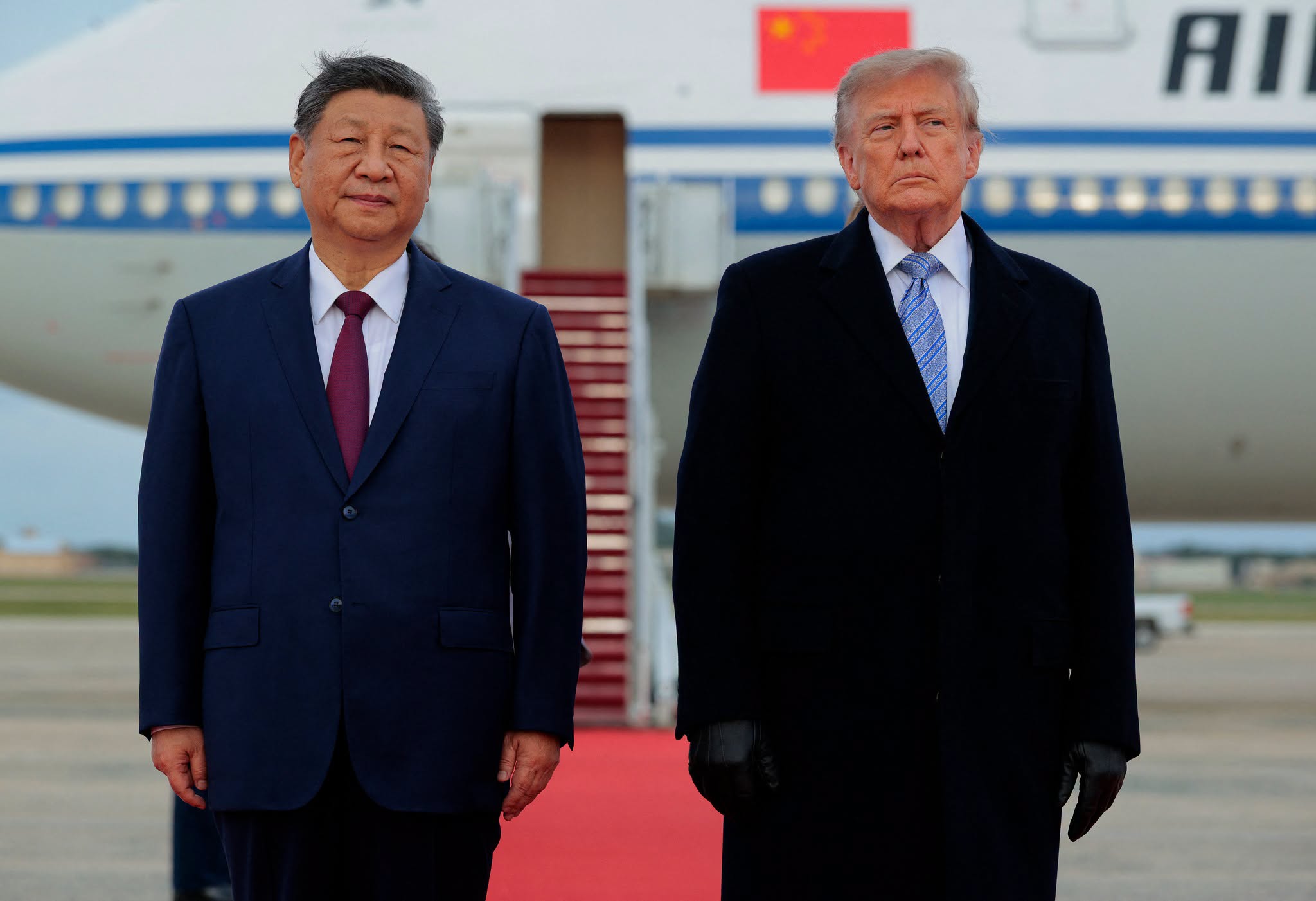
In 2018-19, during his first term, when Trump imposed additional tariffs on Chinese goods, China responded with a tariff war. Tariffs were imposed on many American products including soybeans and automobiles. China is a major consumer of American soybeans. When China imposed tariffs, soybean exports dropped by 50%, causing huge losses for American farmers. To compensate for farmers’ losses, the U.S. government had to provide $7.3 billion in aid.
Warning of economic recession
Analysts have been warning since the beginning that Trump’s tariff policies pose a risk of global economic recession. According to a report published by the International Air Transport Association (IATA) on April 22, if the U.S. and other countries get entangled in a ‘tariff war,’ the global growth rate could fall from 3.3% to 3% this year. Similarly, the Organisation for Economic Co-operation and Development (OECD) reported on June 3 that tariff-related decisions will seriously affect not only the U.S. but also the economies of Europe and Asia. Reduced production and imports could cause a synchronized global slowdown, i.e., recession. The report warned that the impact will first hit the U.S., followed by countries such as China, India, Canada, Italy, and Ireland.
Dissatisfaction among allied nations
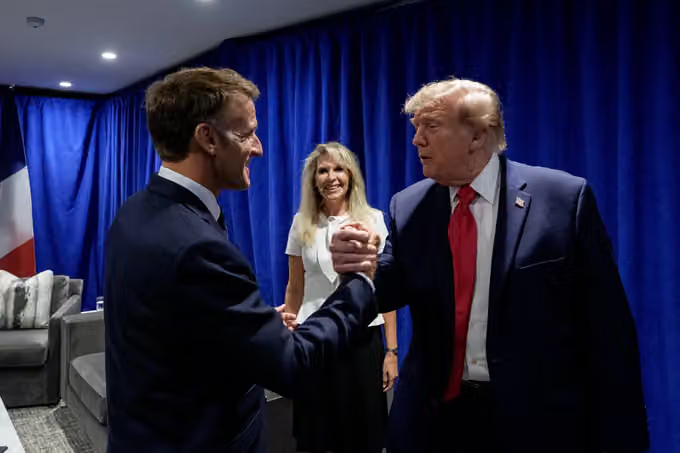
Not only China and India, but Trump’s tariff policies have also targeted even his close allied countries. His aggressive remarks have also irritated neighboring countries. Canada, Japan, South Korea, and France—close allies—are unhappy with Trump’s policies.
These tariff policies are increasingly harming even old relations. Due to Trump’s unpredictable nature, these countries no longer fully trust America. Canada and the U.S. have been close allies for decades, but recent behavior by Trump has increased tensions between them. After Trump’s statement about making a sovereign country a state of the U.S., tensions have remained high.
The situation in Asia is similar. Japan and South Korea have long depended on the U.S. for security. However, due to Trump’s unpredictable behavior, both countries fear sudden and unexpected decisions. Because of this, they are strengthening their domestic investment in defense. Meanwhile, America’s “soft power” to connect the world has weakened, especially in the South Pacific, where China and the U.S. are in direct competition.