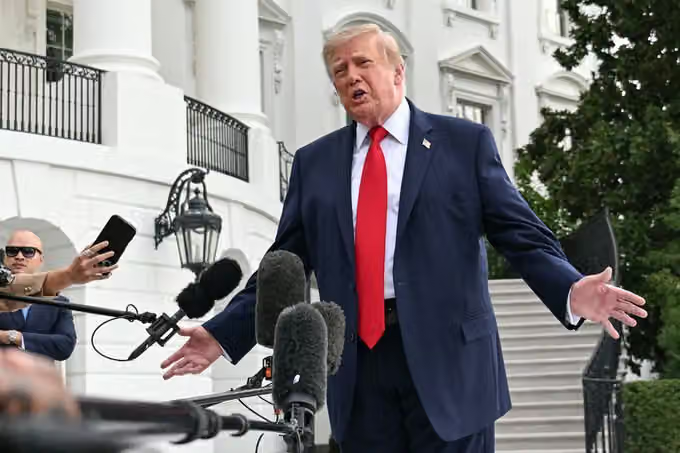
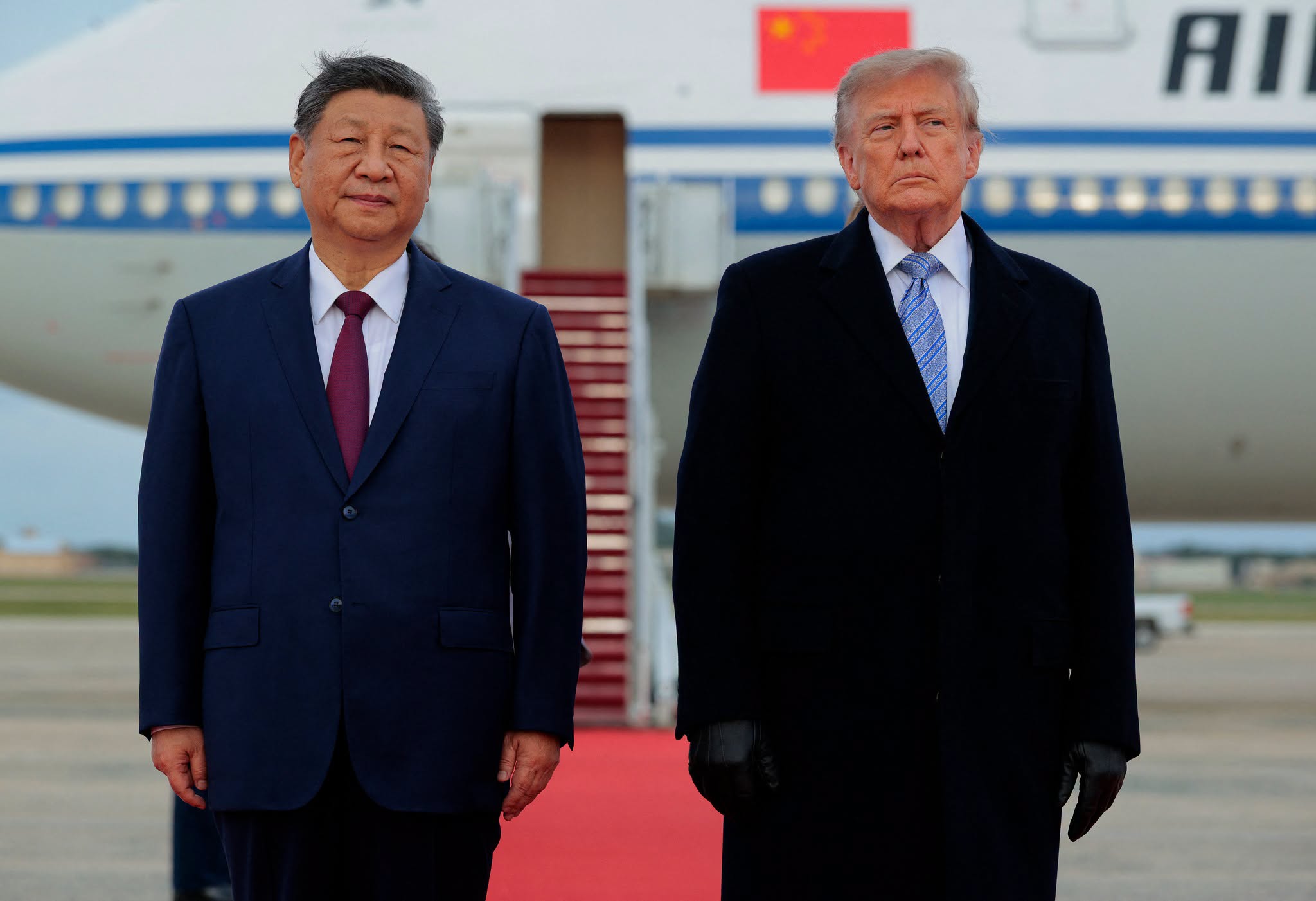
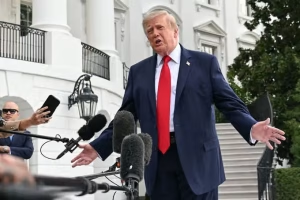
U.S. President Donald Trump has imposed a travel ban on citizens from Afghanistan and 11 other countries, effective from 9 June.
When announcing this last week, he stated that the ban would not apply to holders of the Afghan Special Immigrant Visa (SIV), which is granted to those who worked for the U.S. government or military in Afghanistan as interpreters or in other capacities before the U.S. troop withdrawal in 2021.
This has provided some relief to Afghans who risked their lives working for the U.S. However, due to other measures taken by Trump during his second term, many of them are still under stress.
Although there are multiple immigration pathways for Afghans to enter the U.S., nearly all of them have been affected by the Trump administration, CNN reported.
Thousands of Afghans remain in uncertainty due to cuts in services and offices established to assist with visa applications.
Resettlement efforts for those deemed eligible as refugees have been almost completely halted, further impacting them.
Because Trump ended the Temporary Protected Status (TPS) program in the U.S., those living under this status may also have to leave the country.
Although the recent travel ban exempts SIV holders, many Afghans who assisted the U.S. government during America’s nearly two-decade-long war in Afghanistan do not qualify for this visa.
This provision is for individuals who have worked for the U.S. or on behalf of the U.S. for at least one year.
For example, some may not have completed the minimum one-year period. Even if they have, technically they might not fall under the definition of having worked directly for the U.S. government or its affiliates.
Along with them, family members who have some connection to the U.S. are also at risk of retaliation from the Taliban government.
Although the exemption given for the SIV is welcome, activists say that other government cuts and policy changes have weakened it, making it less effective in practice.
“The problem with this exemption is that it’s somewhat misleading because the government is simultaneously dismantling the office coordinating Afghan resettlement efforts. They plan to close that office by July 1,” said a former U.S. State Department official.
According to the former official, the government is also ending the “Enduring Welcome” program.
This program allows SIV applicants to complete their immigration process in a third country. Since the U.S. has no diplomatic presence in Afghanistan, applicants must attend visa interviews in another country.
“It sounds good to have an exemption for SIV and we do need one. But there also needs to be a structure to bring them here and help them start their lives in the U.S.,” Lamia Afghan Foundation founder and retired Lieutenant General John Bradley told CNN.
Many Afghans who have received SIVs told CNN that their family members and friends are still in Afghanistan or in third countries like Pakistan.
According to the United Nations, Pakistan has sent millions of refugees back to Afghanistan.
Though Trump granted the exemption for SIV holders, there remains uncertainty and fear about how this will affect the process for their family members to come to the U.S.