Kathmandu, 06 Aug: In recent weeks, I’ve started making videos about birds on TikTok. Many people have found them interesting and have really liked the content. I had even made a video about bird migration, which I personally found fascinating.
In that video, I talked about the bar-tailed godwit — a bird known for flying nonstop for 13,000 kilometers. The response to that video was overwhelming.
Many people asked the same question: “Is it really possible to fly 13,000 kilometers without resting even once?”
That got me thinking — what if I made a video about a bird that can fly for even longer periods of time? It would definitely be more intriguing. But when I did, many viewers expressed doubt directly in the comments. Some said they couldn’t believe it.
It’s completely natural to be skeptical of something like that.
So today, let’s talk about that very bird — one that seems like it never stops flying.
Birds, by nature, are creatures that fly — some more than others. In the scientific classification of vertebrates, we have fish, amphibians, reptiles, birds, and mammals.
Among these five, birds are best known for their ability to fly. While some species can’t fly, they are few in number. In general, when we think of birds, we think of flying creatures. Among birds, some are long-distance fliers while others aren’t. For example, birds in the pheasant family — like the Himalayan monal, kalij, and grouse — don’t tend to fly very far.
Hummingbirds, sparrows, swallows, and kites are some examples of birds that can fly for extended periods.
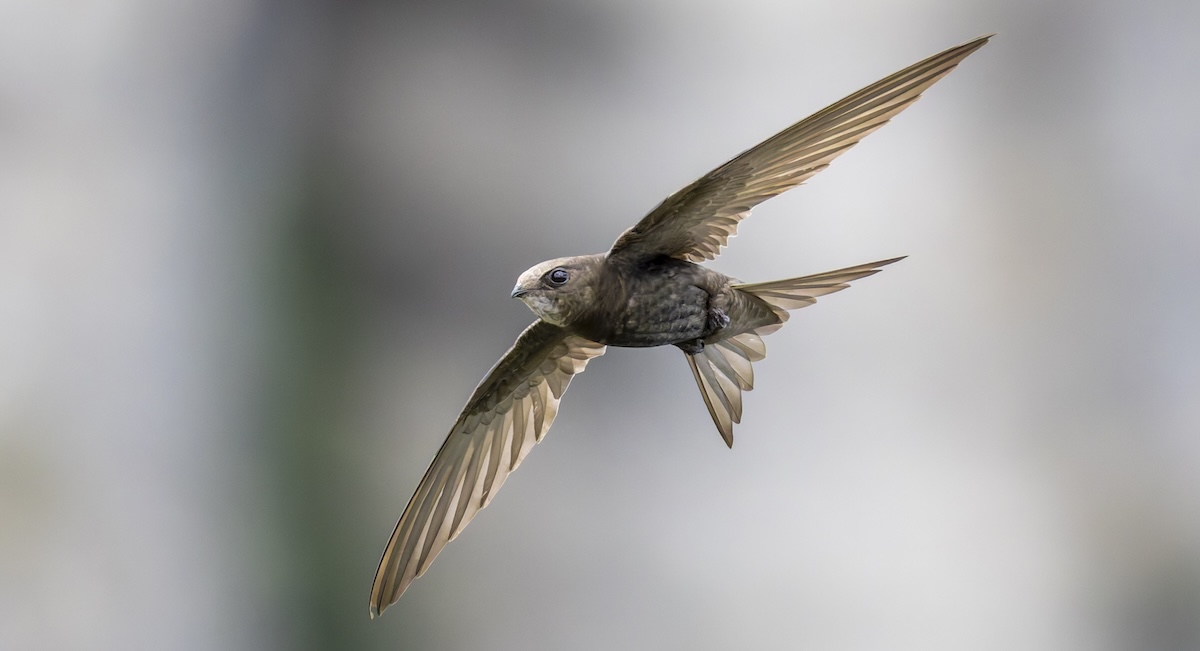
There are even certain birds that, quite literally, spend most of their lives in the air. Two particularly fascinating and well-known examples are the common swift and a type of seabird called the Arctic tern.
Let’s start with the swift.
There are actually two different kinds of birds commonly referred to as “swallow” or “swift,” but they are scientifically distinct. One belongs to the genus Hirundo (swallows), and the other to Apus (swifts), and despite some similarities in appearance, they are very different species.
Swallows belong to the order Passeriformes, which are commonly referred to as “perching birds.”
Out of more than 10,000 species of birds found in the world, nearly 6,000 fall under this order. One distinct feature of perching birds is the structure of their feet. Their toes are adapted for grasping onto branches or similar surfaces — they typically have three toes facing forward and one facing backward, enabling them to perch securely.
Swifts, on the other hand, belong to the order Apodiformes. These birds are often said to “have no feet,” which doesn’t mean they literally lack feet — rather, their feet are very small and not well suited for perching or walking. Swifts feed entirely while flying — they catch and consume insects mid-air.
Both swallows and swifts are exceptional fliers. They feed on insects while in flight and can even skim water from rivers or lakes without landing.
A 2016 study revealed a fascinating fact about swifts. I actually made a TikTok video about this, but many viewers didn’t believe it. The common swift — a species of swift — was found to fly continuously for up to 10 months without landing once. That was the focus of my video.
In response to that video, many people asked, “Can a bird really fly non-stop for 10 months?”
The answer is: yes, it can.
This fact has been confirmed through extensive scientific research by ornithologists.
Another common question people ask, with great surprise, is: “Does the bird fly for 10 months without eating?”
During the study, researchers attached tracking devices to the birds to measure their flight speed and wing activity. These devices recorded how the wings moved and how fast the birds were flying.
As an additional example, I mentioned the batasi swift (pallid swift), which is known to remain airborne continuously for up to seven months.
In the image shown below (referring to your original TikTok or visual), you can see a graph with three colored lines. The blue line indicates day and night — when the blue line is high, it represents daytime, and when it’s low, it represents nighttime.
The red line measures the bird’s overall activity. The green line tracks the movement of the wings — it shows whether the bird’s body is in motion or not.
Now, if you look at this next graph, you’ll notice a black arrow. Just beyond that arrow, you can clearly see the distinct difference in the swift’s activity during day and night. It shows that the bird is active during the day and appears to rest at night.
Swallows belong to the order Passeriformes, which are commonly called “perching birds.”
Out of more than 10,000 bird species found worldwide, about 6,000 species fall under the Passeriformes order. Perching birds have a special structure in their feet that allows them to grasp and perch on branches or other surfaces. Typically, they have three toes facing forward and one toe facing backward.
Swifts belong to the order Apodiformes. It is often said that these birds have no feet, which doesn’t mean they literally lack feet, but rather that their feet are very small. These birds find and eat food while flying.
Both swallows and swifts are excellent fliers. They catch insects mid-flight and can even drink water while flying over rivers or lakes.
A study conducted in 2016 revealed an interesting fact about swifts. I made a video about this on TikTok, but many viewers found it hard to believe. It was discovered that the common swift, known as Apus apus, can fly continuously for up to 10 months without landing anywhere on the ground. I made a video about this very fact.
In response to my video on the common swift, many people asked, “Can this bird really fly nonstop for 10 months?”
Yes, it can.
This fact has been confirmed through detailed scientific studies by ornithologists.
Another surprising question many asked was, “Does this bird fly for 10 months without eating?”
During the study, devices were attached to the birds to measure flight speed and wing movement. These devices tracked how the wings moved and how fast the bird was flying.
Here, I take the example of the common swift, which can fly nonstop for up to seven months.
In the image shown below, you can see a graph with three colored lines. The blue line represents day and night, where the line is high during the day and low during the night.
The red line measures the bird’s overall activity. The green line tracks the movement of the wings, showing whether the body is in motion or not.
Now, if you look at this next graph, you’ll see a black arrow. Just beyond that arrow, you can clearly see the difference in the swift’s activity between day and night. It shows that the bird is active during the day and rests at night.
When the arrow starts (September 22), the bird’s activity during day and night becomes the same. From that point onward, their migration begins and continues almost until April 8–15. By then, the birds have reached their breeding grounds. After that, they are active only during the day.
Now, let’s talk about how these birds sleep.
The study found that these birds do not land on the ground throughout their flight. Of course, no animal or bird can survive that long without sleep.
Here’s something interesting.
Some mammal species have a unique sleeping system, such as dolphins and whales.
This system is called unihemispheric slow-wave sleep — meaning these animals can sleep with only one hemisphere (half) of their brain at a time.
A study on the bird called frigatebird showed that it can sleep using one half of its brain or sometimes both halves for a short time while flying.
These birds were studied during flight using EEG (electroencephalography) recorders, accelerometers, and GPS devices. The research showed that sleep during flight is usually very short. The frigatebird was recorded sleeping for up to 42 minutes during flight.
There hasn’t been such a study on swifts yet, but it’s possible they sleep in a similar way to frigatebirds!
Not only the common swift but also the pallid swift has been found to fly continuously for up to seven months. In the future, there will likely be studies on how these birds sleep during such long flights.
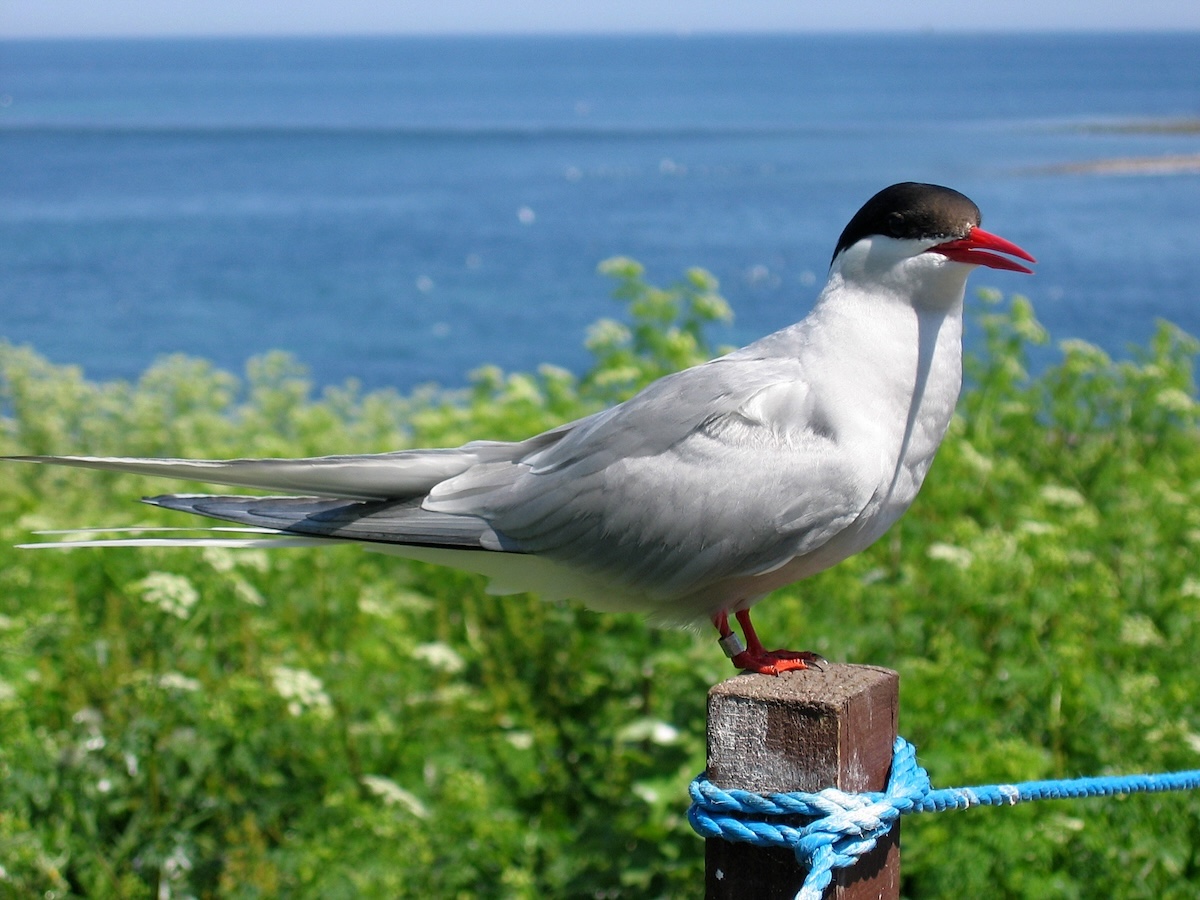
When talking about famous flying birds, we cannot forget the Arctic tern. This bird, known as a type of tern, has an extraordinary and fascinating migration pattern. During migration, these birds can travel up to 80,000 kilometers in a year.
These birds experience summer twice in a single year but never face winter. This is because during the summer in the Northern Hemisphere, they migrate to the Arctic region to breed. When winter approaches in the northern latitudes, they migrate southward, where it is summer in the Southern Hemisphere.
Birds truly are unique creatures. Some aspects of their fascinating lives are almost unbelievable.
Even though I have been reading about birds for a long time, such facts still amaze me. This only deepens my fascination with birds.
(The author, Anuj Ghimire, has completed a PhD in Zoology from North Dakota State University)