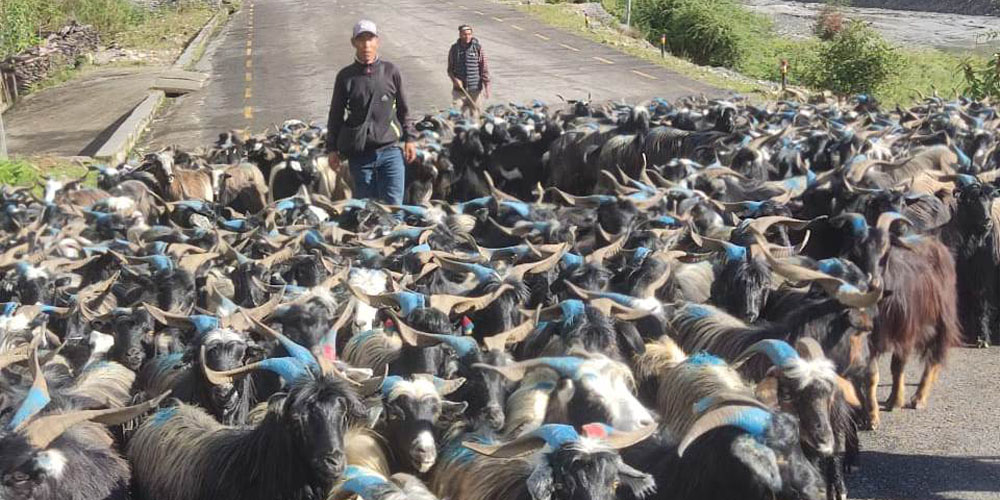
Mustang, 21 Sep: Angyal Gurung, a farmer from Chhoser in Lomanthang Rural Municipality-1 of Upper Mustang, took 10 days to bring his herd of Himalayan goats (chyangra) to the Ghasa border of neighboring Myagdi district. Having sold 100 goats directly to traders at his farm, Gurung grew dissatisfied after learning that middlemen were inflating prices to burden consumers. Determined to bypass them, he set out with 200 goats to sell directly to buyers. Gurung, who has been raising chyangra for 18 years, said he is traveling from Mustang through Myagdi’s Annapurna Rural Municipality-6, Ghorepani, and Ghandruk, eventually reaching Pokhara to sell his livestock. More than 10 farmers from Upper Mustang are currently selling goats directly in the market.
Direct Sales Offer Relief to Consumers
“Middlemen were found manipulating prices, so we came to the market to offer goats at around Rs. 35,000 each,” Gurung explained. Compared to last year, the price per kilo has also dropped, with farmers from Lomanthang and Lo-Ghekar Damodarkunda bringing their goats directly to consumers. Gurung noted that even after paying monthly wages to four herders, covering travel costs on foot, and investing in fodder and shed improvements, he earns Rs. 3.5 to 4 million annually. Consumers are benefiting as farmers are selling goats at Rs. 30,000 to 35,000 each—Rs. 5,000 to 10,000 cheaper than through brokers. This season, Mustang farmers have already reached Myagdi, Baglung, Parbat, Kaski, and other districts with their livestock.
High Demand During Dashain Festival
Farmers, who raise goats for nearly two years before selling them, have formed groups to bring them directly to urban markets, ensuring both affordable prices for consumers and good income for themselves. According to Dr. Lalmani Aryal, head of the Veterinary Hospital and Livestock Expert Center in Mustang, over 12,000 goats have been dispatched from Mustang alone this Dashain season. All are expected to be sold by Ghatasthapana, the festival’s opening day. Goat sales from Mustang and neighboring districts are projected to generate more than Rs. 4 billion this year, with health checks confirming all animals are in good condition.
The Prime Minister’s Agriculture Modernization Project reports that there are 56,000 goats in the sheds of 100 listed farmers in Mustang, while unregistered farmers also sell their livestock. Consumers note that goats raised in the high Himalayas, feeding on natural herbs, are particularly tasty and beneficial for health.