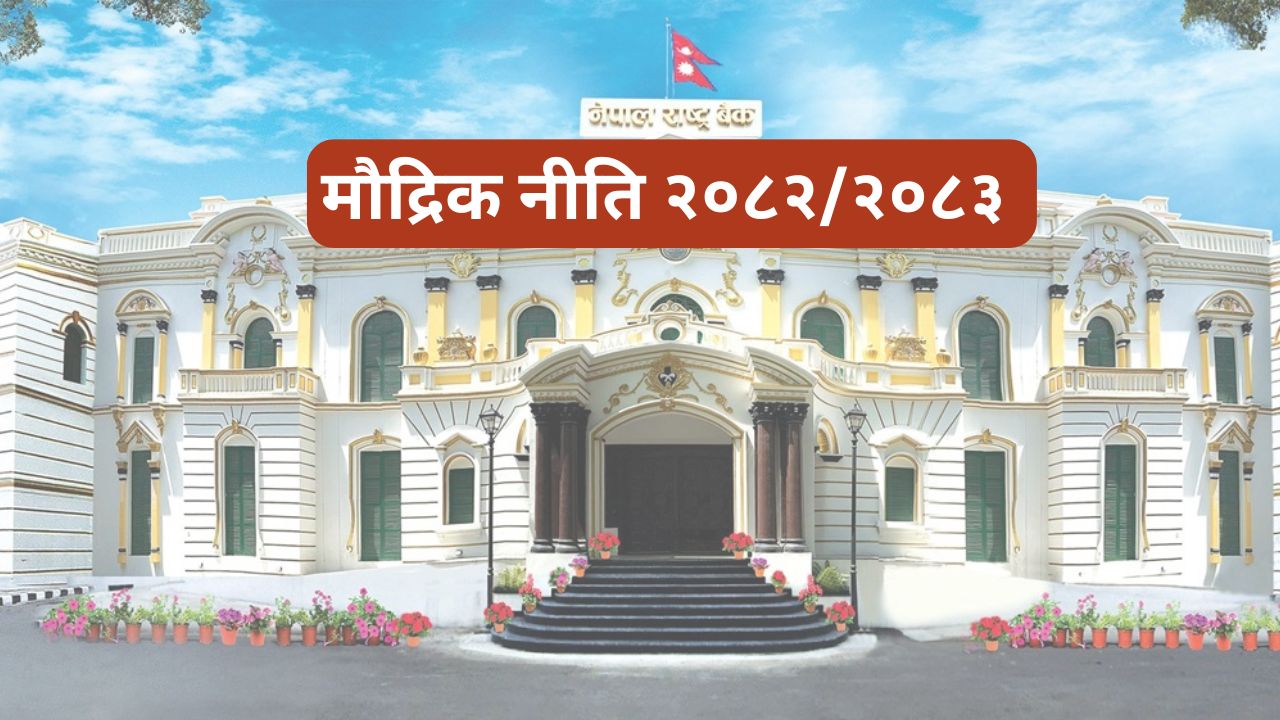
Kathmandu, 11 Jul: Nepal Rastra Bank released the monetary policy for the fiscal year 2082/83 on Friday. Governor Dr. Bishwanath Paudel presented the 59th monetary policy of the central bank.
The main objectives of the monetary policy include managing the money supply within the country, controlling inflation, maintaining a balance between foreign income and expenditure, and ensuring the stability of the financial sector.
Here are 10 key highlights of this year’s monetary policy:
1. Further Reduction in Deposit Interest Rates
Nepal Rastra Bank has lowered the upper limit of the interest rate corridor from 6.5% to 6%, and the lower limit from 3% to 2.75% in the new monetary policy.
Currently, the general public receives a minimum interest rate of 3%, which follows the lower bound of the corridor. With the new policy, this rate is likely to decrease.
Similarly, the central bank has been offering 3% interest on excess funds held by banks as deposits; now this will be reduced to 2.75%.
Additionally, the policy rate has been cut from 5% to 4.5%.
2. Loan Limit Increased for Buying Private Homes
The loan limit for constructing or purchasing private residential houses has been raised from NPR 20 million to NPR 30 million. For first-time home buyers, loans up to 80% of the property’s value are allowed; for others, the limit is 70%.
3. Foreign Travelers Can Exchange Up to USD 3,000
Nepali citizens traveling abroad (excluding India) can now exchange up to USD 3,000 per trip, up from the previous limit of USD 2,500.
4. Banks Allowed to Increase Capital
Banks will now be allowed to raise capital with Nepal Rastra Bank’s approval as needed. This aims to ease pressure on banks facing capital adequacy challenges despite having lending capacity.
5. Share Mortgage Loan Limit Increased to NPR 250 Million
The personal loan limit against shares as collateral has been increased from NPR 150 million to NPR 250 million. Investors had long been demanding a higher limit.
6. Bad Loan Recovery Amount Counted as Tier 2 Capital After 2 Years
If bad loans taken over by banks remain unsold for over two years, the reserved regulatory funds for such assets can now be counted as supplementary (Tier 2) capital.
7. Banks Can Lend Up to NPR 1 Million to Agriculture Based on Self-Valuation
Banks can provide up to NPR 1 million in loans for agriculture using their own valuation of crops, arable land, and farm structures. Provisions for minimal loan loss coverage will apply during the grace period.
8. NRB to Draft Law for Asset Management Companies
NRB will draft and submit legislation to the government for the establishment of asset management companies (“bad banks”) to handle rising non-performing assets in financial institutions.
9. Loans to Be Provided Based on Credit Scores
Financial institutions will begin granting loans based on customers’ credit scores. This aligns with demands from borrowers for more favorable interest rates linked to credit ratings.
10. Microfinance Dividend Limit to Be Reviewed
The current 15% cap on annual dividends (cash or bonus) for microfinance institutions will be reviewed. Any distribution above 15% currently requires allocation to specific reserve funds.