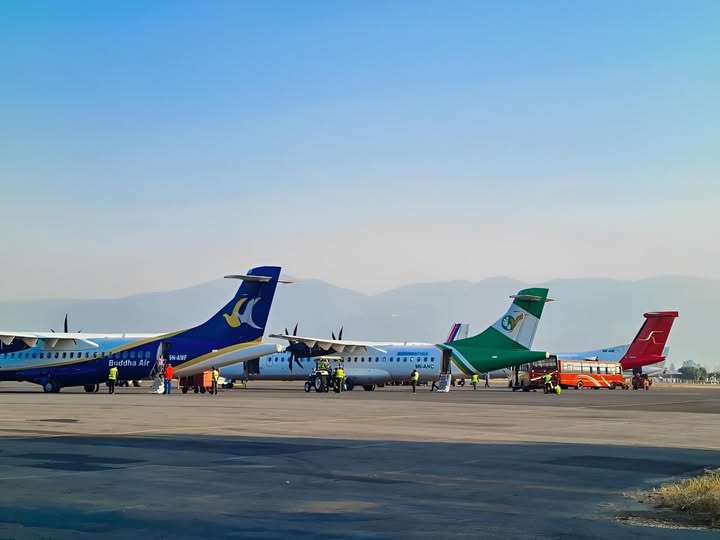
Kathmandu, 7 Jul: The government is preparing to increase the compensation amount for families of passengers who lose their lives in domestic airline crashes.
This move follows the public release of the draft of the Air Carrier Liability and Insurance Bill 2082 by the Ministry of Culture, Tourism, and Civil Aviation. The draft includes provisions to revise compensation and insurance policies related to domestic air services. Although the government has long intended to raise the insurance payout for such incidents, it has so far failed to implement the changes.
Back in 2080 BS, the Council of Ministers had granted the ministry a policy-level agreement to draft a bill addressing liability and insurance for domestic airlines.
Currently, in the event of a domestic air crash, the compensation provided to the family of a deceased passenger stands at only USD 20,000 (approximately NPR 2.72 million based on Monday’s exchange rate).
The draft bill proposes to increase the compensation amount for victims of domestic airline crashes by fivefold — from the current USD 20,000 to USD 100,000 (approximately NPR 13.6 million).
Although the Ministry of Culture, Tourism, and Civil Aviation had formed a task force to draft this bill back in Chaitra 2077 (March/April 2021), the issue was not prioritized for a long time.
Nepal had ratified the Montreal Convention 1999 in 2018, as per the standards set by the International Civil Aviation Organization (ICAO). After that, compensation for deaths resulting from international airline crashes was raised to USD 165,000 (around NPR 22.44 million). The proposed compensation for domestic flights will be slightly lower in comparison to international flights.
The Montreal Convention also covers compensation for delays, cancellations, injuries, disabilities, or deaths during air travel, as well as loss, delay, or damage to cargo or luggage.
Key Provisions in the Draft Bill:
-
Ticket, baggage tags, or receipts will serve as valid proof of travel.
-
If a passenger suffers injury, physical harm, or disability while boarding, inside, or exiting the aircraft, the concerned airline must compensate the victim up to a maximum of USD 100,000, based on the severity of the case.
-
In the event of death, the airline must pay USD 100,000 to the nearest legal heir of the deceased.
-
If the passenger is injured or disabled, the airline must also cover the full cost of medical treatment.
-
However, if the injury or disability is proven to result from the passenger’s own serious negligence or a pre-existing medical condition, the airline will not be liable for compensation.
-
Families of deceased passengers must file a claim within 60 days of the incident.
-
The bill also provides for compensation related to baggage:
-
If checked baggage is lost or damaged, the airline will be responsible for compensation up to USD 20 per kg, not exceeding a total of USD 5,000 (or equivalent in Nepali currency).
-
-
Airlines must not allow passengers to travel without a valid ticket.
-
Airlines are responsible for ensuring passengers travel safely, on the scheduled date and time.
-
In the case of flight cancellations or delays, passengers must be informed at least 3 hours in advance.
-
If an airline cannot accommodate a ticketed passenger due to load or other issues, it must offer an alternative flight. If not possible, an alternative route must be arranged, or the ticket must be refunded.
Additionally, the airline will be held responsible for any damage to passengers’ baggage during the journey.
According to Ministry Spokesperson Ram Krishna Lamichhane, the draft has been made public for feedback from the general public. Written suggestions can be submitted to the ministry by Asar 27 (July 11, 2025).