Kathmandu, 6 Jul: Once again, Nepali supporters were left disappointed in women’s football. Despite coming close to victory in a crucial and decisive match, Nepal failed to secure success. In a game that carried significant weight for the future of Nepali women’s football, Nepal was eliminated from qualifying for the Women’s Asian Cup after a strong comeback against Uzbekistan, ultimately losing in a penalty shootout.
Nepal had been trailing by two goals during regular time, but thanks to an inspiring performance by captain Sabitra Bhandari, they managed to level the score at 3-3 by the end of 90 minutes. Since the points and goal difference were equal, the group winner had to be decided by a penalty shootout. Unfortunately, it was captain Sabitra herself who missed the first penalty, costing Nepal a crucial opportunity. All four Uzbek players converted their penalties.
For Nepal, Sabitra missed the first penalty, while Geeta Rana and Sabita Rana Magar both scored. However, goalkeeper Anjana Rana Magar missed the fourth penalty, resulting in a 4-2 defeat for Nepal in the shootout.
This loss was not just a single match defeat—it marked a significant setback for Nepali women’s football. Failing to qualify for the Women’s Asian Cup meant that even a strong team like Nepal missed out on the chance to compete at the continental level.
This was Nepal’s second consecutive attempt to qualify for the Women’s Asian Cup, and for the second time in a row, they fell short.
This means Nepal has not only missed out on the Women’s Asian Cup but has also lost the opportunity to qualify for the FIFA Women’s World Cup 2027 and the Los Angeles Olympics 2028.
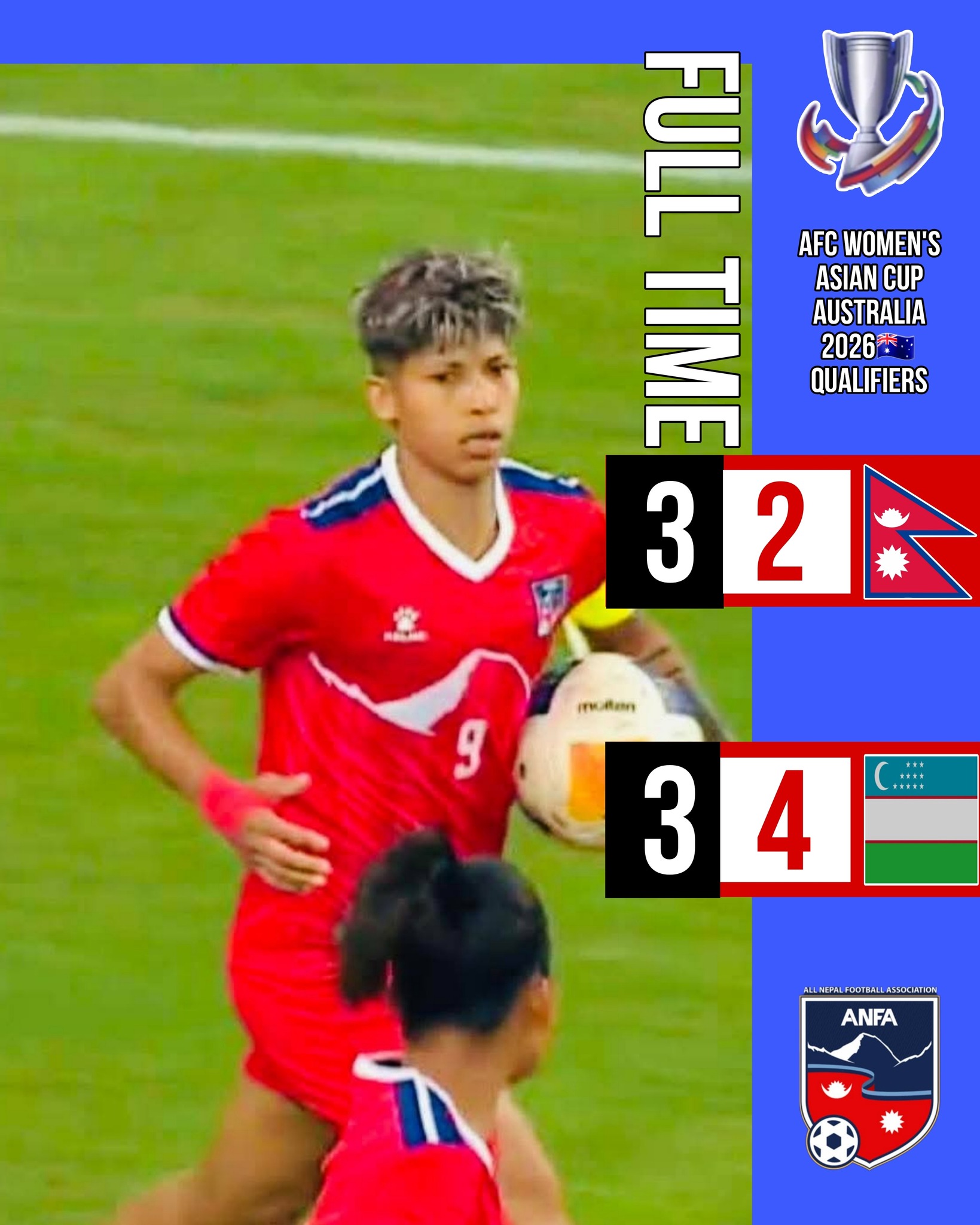
In the match played at Milliy Stadium, the host team Uzbekistan took the lead as early as the second minute. Khabibullaeva scored the opening goal after capitalizing on a failed clearance by Nepal’s Geeta Rana.
In the 11th minute, Uzbekistan scored their second goal. This time, captain Karachik made a solo run down the left side into the box and took a shot, which deflected off defender Samiksha Ghimire and went into the net.
Despite trailing by two goals, Nepal managed to fight back. Captain Sabitra Bhandari reignited Nepal’s hopes with a goal in the 24th minute. However, misfortune struck in the 39th minute when Uzbekistan was awarded a penalty. Shoimova converted it, extending Uzbekistan’s lead to 3–1.
Just before halftime, the match took another dramatic turn. N. Ergasheva of Uzbekistan was sent off with a red card (second yellow) during injury time, reducing the home team to ten players.
Uzbekistan played the entire second half with one player less, making it a 11 vs. 10 contest. However, Nepal was unable to capitalize on the numerical advantage.
Since the Women’s Asian Cup also serves as a qualifier for the World Cup and Olympics, Nepal’s failure to qualify means missing out on all three major tournaments at once.
Nepal, placed in Group F of the Asian Cup qualifiers held in Tashkent, finished second behind host Uzbekistan. Only the group winner would qualify for the 2025 Asian Cup in Australia.
With both teams having defeated Laos and Sri Lanka in earlier matches, the final clash was a do-or-die for both sides. Nepal had crushed Laos 9–0 and Sri Lanka 8–0, while Uzbekistan defeated Sri Lanka 10–0 and Laos 7–0. Both teams entered the final match with two clean-sheet wins, 6 points, and 17 goals each — making the last match a must-win.
In the end, it was the host team, Uzbekistan, that emerged victorious and secured qualification.
Nepal’s failure to qualify this time means that a golden generation of Nepali women footballers will not get the opportunity to fulfill their dream of playing in the Asian Cup.
Goalkeeper and former captain Anjila Tumbapo Subba had expressed before leaving for Uzbekistan that this was a golden opportunity, and she was unsure whether she would play again after four years. For her, the Uzbekistan tour turned into a forgettable experience. She lost both of her long-held roles — team captain and first-choice goalkeeper. After being stripped of the captain’s armband, she was also left out of the starting lineup.
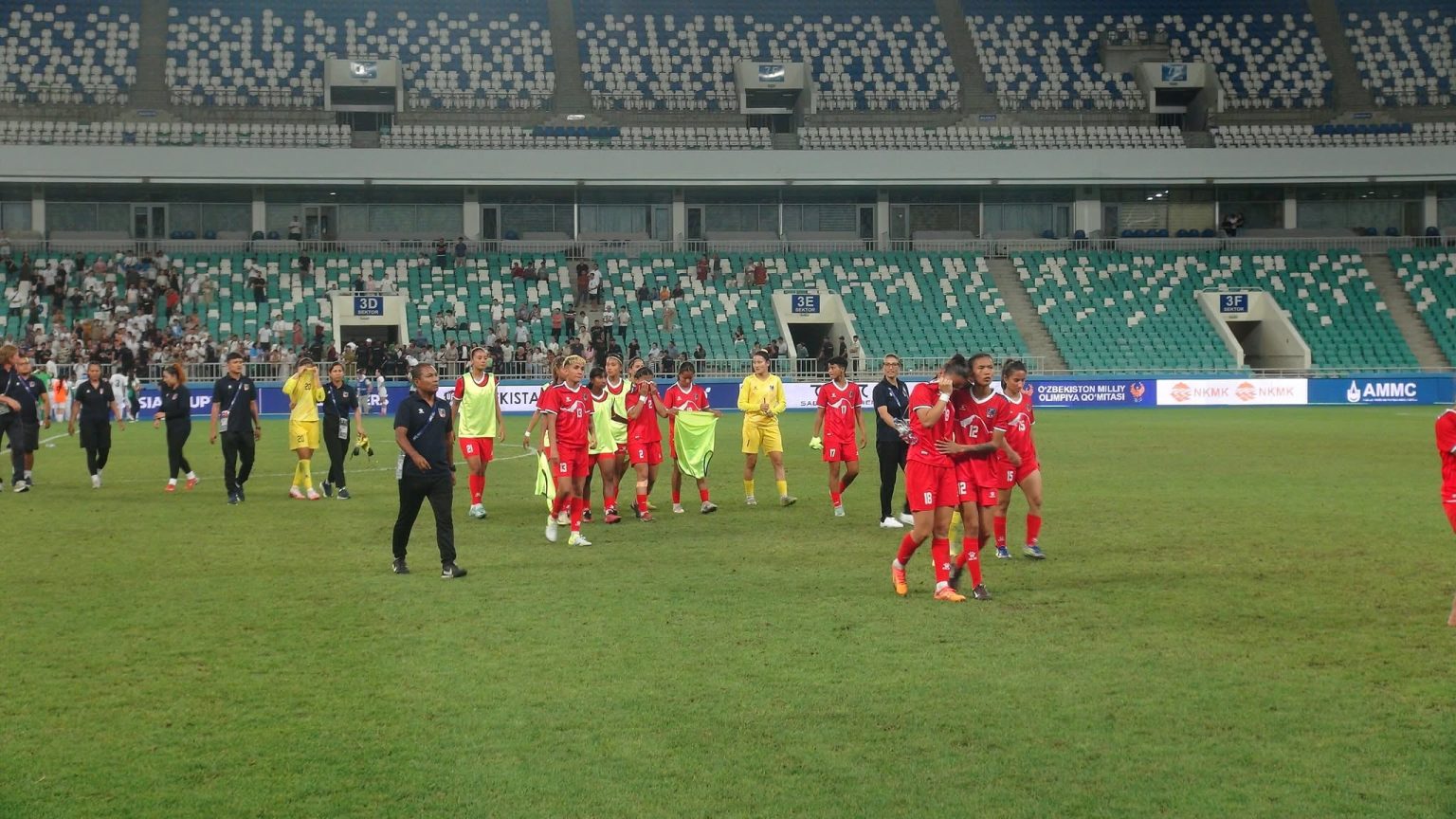
Meanwhile, internal disputes involving new head coach Patrick de Wilde and the team management became visibly apparent during the Uzbekistan tour. Sabitra Bhandari, Nepal’s goal machine and the first Nepali woman to play professional football in Europe, captained the team in her 100th international match and even scored a hat-trick. But the joy of her achievement was short-lived, as the captaincy change itself became a subject of controversy.
While South Asian neighbors India and Bangladesh managed to qualify for the Women’s Asian Cup, Nepal’s failure to do so highlights deeper concerns about the country’s football structure and leadership.
There was a time when India posed the biggest challenge for Nepal, but in recent years, Bangladesh has become the more consistent rival — defeating Nepal regularly. Even though Nepal defeated India in a recent SAFF Championship, they have repeatedly lost to Bangladesh.
Unlike Nepal, Bangladesh has made substantial investments in grassroots football and is now making strides at the international level. In just the past four years, Bangladesh has twice come to Nepal and lifted the SAFF Women’s Championship title. In contrast, Nepal has reached the final 13 times but has never managed to win the trophy.
The fact that Nepal’s women’s team has yet to claim any major title remains one of the bitter truths of Nepali football.