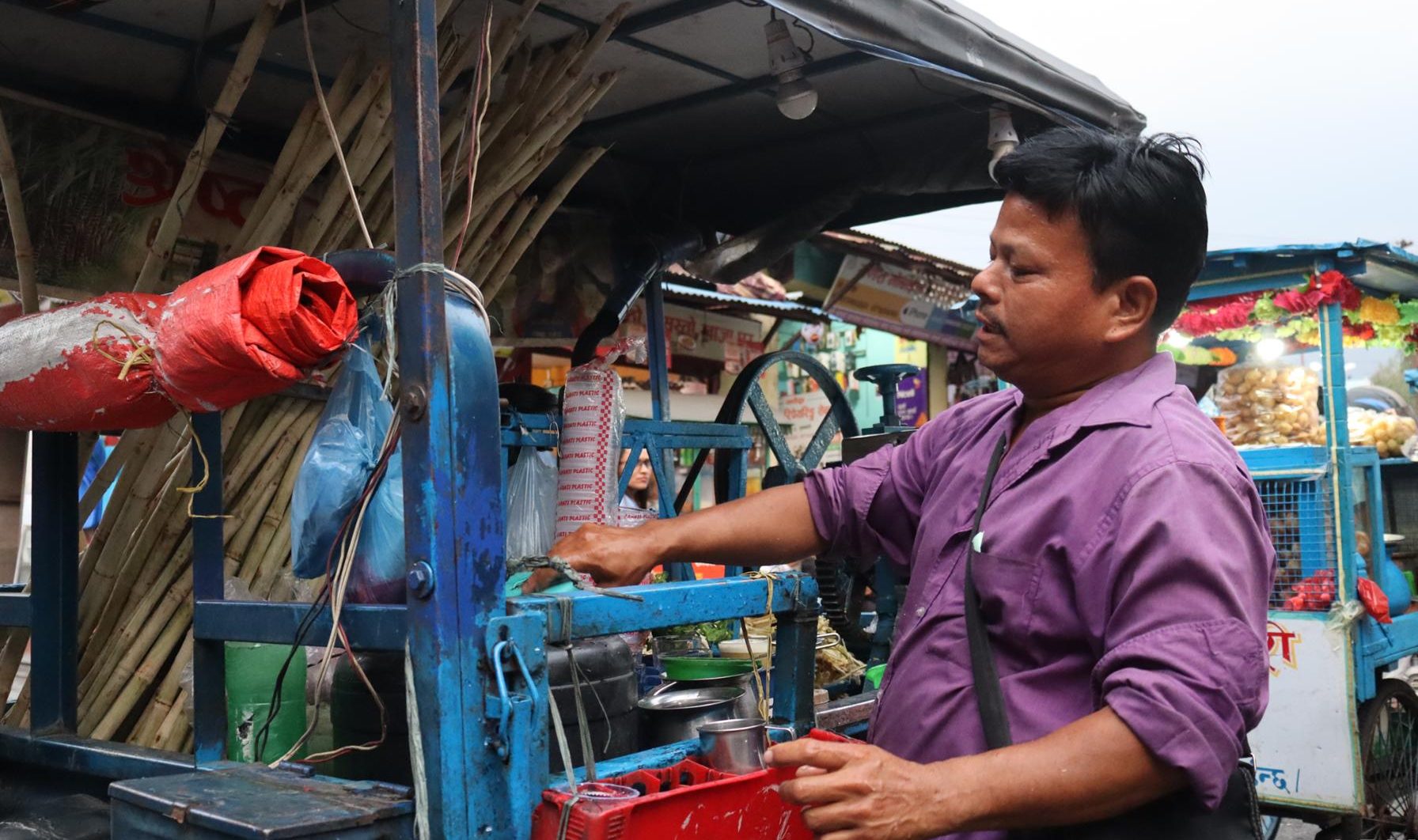
Kathmandu, 23 April: Saroj Gautam of Itahari Sub-Metropolitan City–6 has been running a sugarcane juice business for the past 11 years. During the summer season, he earns up to NPR 90,000 per month.
With the rising heat, the sugarcane juice stall set up by the roadside—complete with a pressing machine inside—provides not only refreshing relief to travelers with its sweet juice but also increases the income of the vendor.
After working as a security guard in Malaysia for seven years, Gautam returned to Nepal and started a sugarcane juice business in an alley near his home in Itahari. He has been in this profession for the past 11 years and shared that he earns up to NPR 90,000 per month during the summer season. According to him, after deducting all expenses, he is able to save around NPR 40,000 monthly.
Gautam said, “By selling sugarcane juice, I’ve been able to educate my children and cover all household expenses. Rather than toiling under the hot sun abroad, it’s better to run even a small business in your own country.”
Initially, he tried driving a tempo, but when that didn’t bring in enough income, he bought a juice-making machine for NPR 70,000 and started his business. “Sugarcane for juice is easily available, so there’s no problem. I’ve rented about one bigha of land in Barahakshetra to grow sugarcane myself. If that’s not enough, I buy from other farmers,” he explained.
Asmita Shrestha from Itahari mentioned that sugarcane juice is not just tasty but also healthy. “Drinking fresh, delicious juice from here is much healthier than having pre-made juices left out in the heat,” she said.
Similarly, Deepak Shrestha from Dharan Sub-Metropolitan City–5 returned to Nepal after working 10 years in Qatar and four years in Iran. He has now expanded his juice business across various alleys in Dharan and said this is his main source of income.
“Although there were many challenges and problems in the beginning, the business now gives me satisfaction. I’ve even partnered with two friends, and together we’ve set up sugarcane juice stalls in Dharan, Itahari, and other places,” Shrestha shared.
He noted that although the initial investment was small, the need to purchase sugarcane, buy equipment, and compete in the market made it a tough start. “At first, we had no customers. We had to go door-to-door through alleys encouraging people to try the juice. But now, customers call us asking where our stalls are,” he said.
One person has been employed at Shrestha’s stall for the past 10 years. He also shared that he cultivates sugarcane on three bighas of land in Jhapa and has employed two more people to help with the farming.
“I feel proud to be able to provide jobs to others through my own business. What started with a small investment is now generating a decent income. Business isn’t always steady, but it’s satisfactory. I can pay my staff, educate my children, manage household expenses, and still save NPR 70,000 a month,” he said.