After nearly two weeks of attacking each other, a ceasefire has been declared between Iran and Israel.
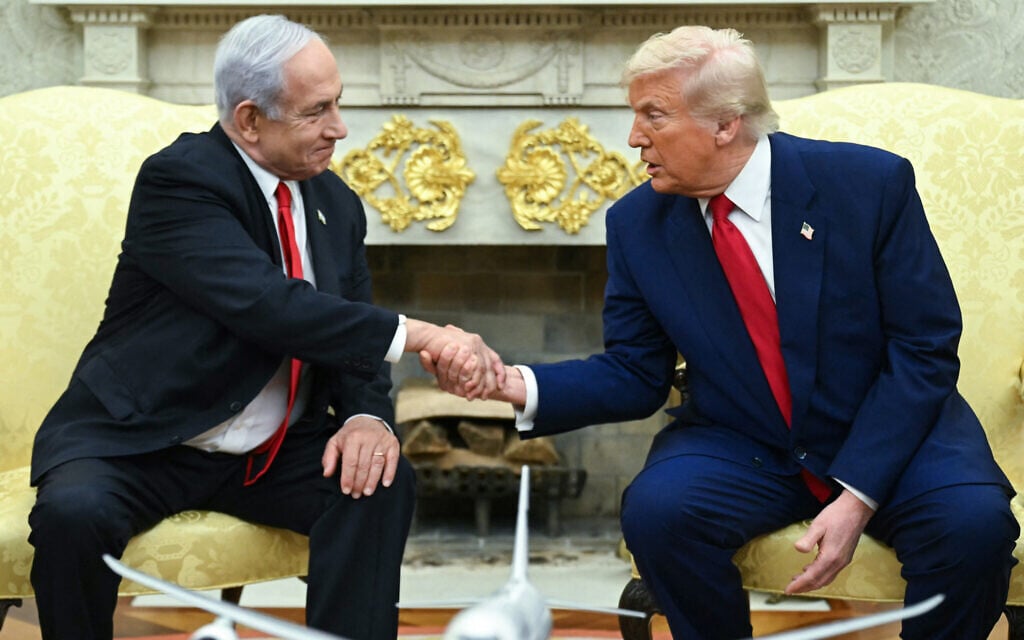
Following U.S. President Donald Trump’s announcement on Tuesday that Iran and Israel had agreed to a ceasefire, both countries have refrained from launching further attacks. For the past two days, Iranians and Israelis have been able to sleep peacefully.
However, even after the ceasefire, Iranians are reportedly gripped by a deep concern, according to the American newspaper The New York Times.
The concern revolves around the unknown whereabouts of Iran’s Supreme Leader, Ayatollah Ali Khamenei. Although a ceasefire has been declared, he has yet to make any public appearance. As a result, questions are increasingly being raised among the public about where he is, what condition he is in, and whether he might be injured, according to The New York Times.
The report also mentions that some people have even started to question whether he is still alive.
Following a week of war with Israel, Khamenei reportedly went into hiding in a bunker due to security concerns. The location of that bunker remains undisclosed, and access to him is said to be extremely limited.
In Iran, all major decisions are made by the Supreme Leader.
After the United States carried out massive bombings on Iran’s three key nuclear facilities—Fordow, Natanz, and Isfahan—Iran retaliated by launching attacks on U.S. military bases located in Qatar and Iraq.
The day after U.S. President Donald Trump announced a ceasefire, Iranian Foreign Minister Abbas Araghchi stated that Iran would be ready for a truce if Israel halted its attacks.
Public concern has grown significantly due to Supreme Leader Ayatollah Ali Khamenei’s continued absence during such major developments.
“The Supreme Leader has not appeared publicly regarding crucial decisions such as the attack on U.S. military bases or the ceasefire with Israel. There has been no official statement, nor any recorded audio or video message,” The New York Times reported.
This has led to widespread anxiety across Iran, from government officials to ordinary citizens, the paper noted.
On Tuesday, Iran’s state television aired an interview with Mehdi Fazaili, head of the archives department at Khamenei’s office. The interviewer asked him directly: “The public is deeply worried. Where is the Supreme Leader, and what condition is he in?”
Fazaili did not offer a clear answer, stating only, “Let us all pray for him. He is safe, but I cannot say more.” He acknowledged that many top officials and citizens were concerned about Khamenei’s condition, and emphasized that the authorities responsible for his security were doing their job well.
Mohsen Khalifeh, editor-in-chief of the Iranian newspaper Khaneman, also noted the growing national concern over Khamenei’s prolonged absence. “His followers are deeply worried. If he has passed away, his funeral would be a historic one,” he was quoted as saying.
In Iran, the powerful Islamic Revolutionary Guard Corps (IRGC) is responsible for the Supreme Leader’s protection. According to IRGC commander and Khamenei’s security advisor Hamzeh Safavi, there remains a serious threat from Israel to assassinate Khamenei, which is why he has been placed under tight security with extremely limited outside contact.
The New York Times quoted Safavi as saying, “Even though a ceasefire is in place, Israel may still attempt to assassinate the Supreme Leader. Therefore, a practical approach has been adopted to lead the country out of crisis, empowering President Masoud Pezeshkian and other leaders.” He clarified, however, that Khamenei is still involved in key decisions, albeit from a distance.
On the first day of the conflict, Israel killed several top IRGC commanders, including Major General Hossein Salami. Since then, Mohammad Pakpour—appointed by Khamenei—has taken over leadership of the IRGC.
The Israeli strikes disrupted Iran’s chain of military command, creating a credible threat to Khamenei’s life. According to reports, Israel had even informed U.S. President Trump of its plan to assassinate Khamenei on the first day of war. Trump reportedly told Israel not to proceed with the assassination, leading them to hold back.
Later, Trump posted on Truth Social that Khamenei “could be taken out easily” and claimed to know the location of his bunker, but added there were no immediate plans to kill him: “We know where he’s hiding, but at least for now, we won’t strike. Our patience, however, is running thin.” Three minutes later, Trump posted “Unconditional Surrender.”
Reports have surfaced that, anticipating the possibility of his assassination, Khamenei has already selected a successor. He reportedly instructed the Assembly of Experts to fast-track the selection process rather than follow standard procedures.
Meanwhile, The New York Times reported that political factionalism is already underway in Khamenei’s absence. Citing four senior Iranian officials, the paper noted growing competition within the government and military to exert influence over power and decision-making.
These factions reportedly differ over how to proceed with Iran’s nuclear program, relations with the U.S., and managing tensions with Israel. However, for the moment, a more diplomatic and restrained approach appears to be gaining ground. President Pezeshkian is being supported by Judiciary Chief Gholam-Hossein Mohseni-Ejei and the newly appointed army commander, Major General Abdolrahim Mousavi.