Kathmandu, 30 Oct: The powerful cyclone “Montha” that formed in the Bay of Bengal has started affecting Nepal. Originating from the Arabian Sea, the cyclone has already brought snowfall to Nepal’s mountainous regions unusually early—in the month of Kartik (October/November). According to the Department of Hydrology and Meteorology, Montha is stronger than previous cyclones, and its effects will continue to be felt in Nepal for the next three days, until Saturday.
The department clarified that after making landfall in India’s Andhra Pradesh, the cyclone turned into a strong low-pressure system and entered Nepal on Wednesday. In India, it has already caused heavy rainfall and thunderstorms, severely disrupting normal life in several regions.
According to meteorologist Binu Maharjan from the Meteorological Forecasting Division, the cyclone’s impact could cause heavy snowfall in some high Himalayan areas from eastern Nepal to Gandaki Province, along with intense rainfall in the lower regions.
She said, “In most areas, there will be moderate rainfall throughout Thursday and Friday, while the cyclone’s influence will remain strong until Saturday noon.” After midday on Saturday, the effects are expected to gradually weaken, subsiding from the central region toward the east.
The division further reported that continuous rainfall is expected in Lumbini, Gandaki, Bagmati, Madhesh, and Koshi provinces. In Karnali and Sudurpaschim provinces, snowfall in high mountain areas and heavy rain in isolated locations are also likely.
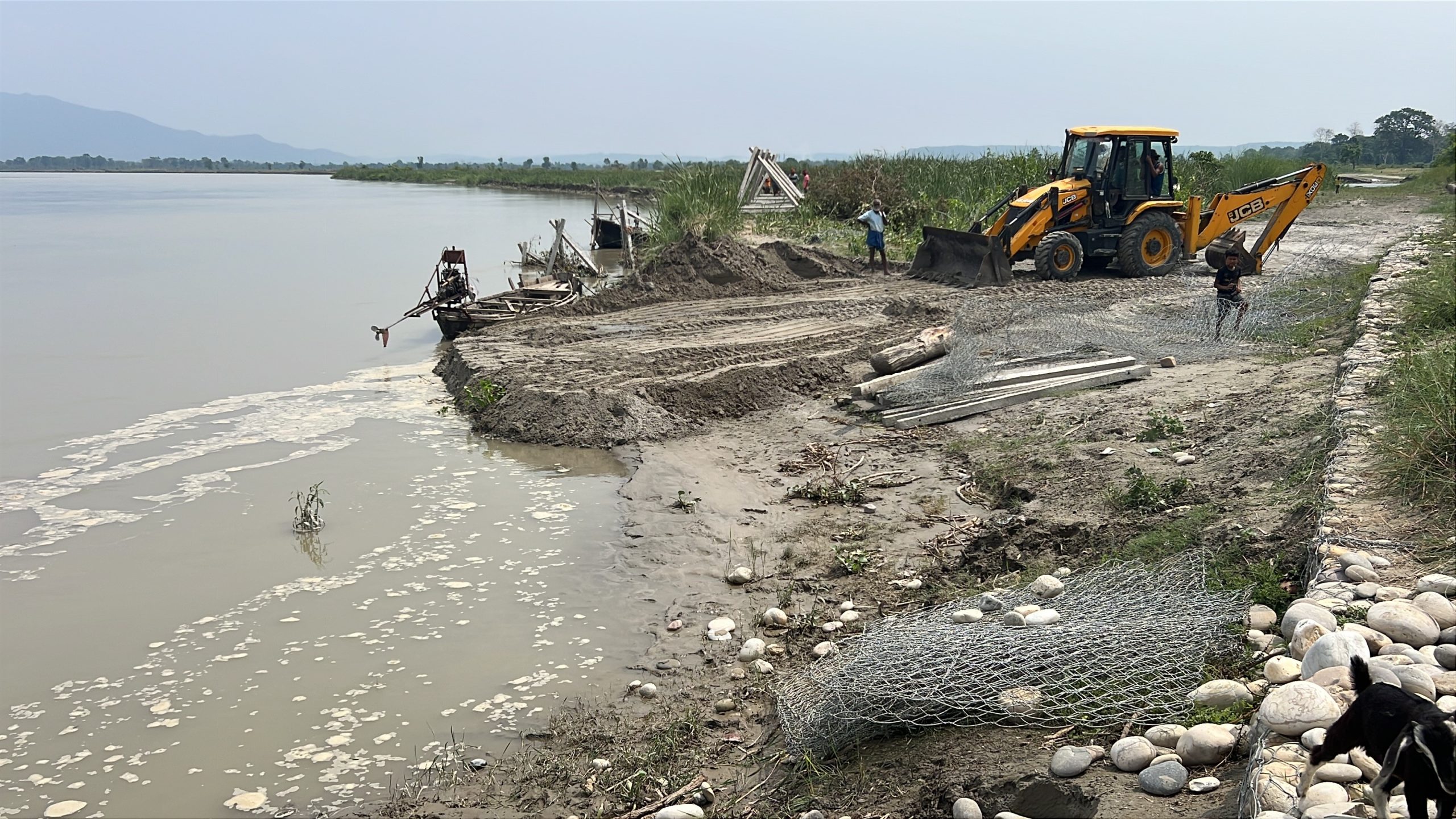
Authorities have warned that the cyclone may affect daily life, mountaineering, agriculture, and tourism, and urged the public to monitor weather updates before engaging in outdoor activities. Due to the expected rainfall over the next three days, the department has cautioned that water levels in the Bagmati, Kamala, Koshi, and Kankai rivers, and their tributaries, may rise significantly and approach alert levels.
The Flood Forecasting Division also warned of possible flash floods in small rivers and streams flowing from the Mahabharat and Chure ranges in Koshi, Bagmati, and Madhesh provinces.
Particular concern has been raised for flood and inundation risks in Kathmandu Valley and several districts of Bagmati Province, as well as in Bara, Parsa, and Sarlahi districts of Madhesh Province. Similarly, sudden floods and landslides may occur in small rivers of Koshi Province, prompting authorities to urge residents to remain vigilant.
Considering the potential severity of the cyclone’s effects, the National Disaster Risk Reduction and Management Authority (NDRRMA) has directed District Disaster Management Committees in likely affected areas to prepare for the protection of lives and property.
The Authority has categorized potentially affected districts in Koshi Province—Sankhuwasabha, Taplejung, Panchthar, Tehrathum, Bhojpur, Dhankuta, Ilam, Jhapa, Morang, and Sunsari—and begun necessary safety preparations. Similar measures are being taken in Madhesh Province districts such as Bara, Parsa, Sarlahi, Rautahat, Mahottari, Dhanusha, and Saptari, as well as in Bagmati Province districts including Kathmandu, Bhaktapur, Lalitpur, Kavrepalanchok, Sindhupalchok, Dolakha, Makwanpur, Chitwan, and Sindhuli.
The Authority has appealed to the public to avoid unnecessary travel for the next three days. Residents of flood-prone settlements and riverbanks are advised to move to higher and safer areas once rainfall begins.
Farmers have been urged not to harvest paddy and other crops during this period—or to immediately store harvested crops in safe locations if already cut. The Authority has also instructed all three security agencies, local governments, volunteers, and related organizations to remain on standby for emergency response.