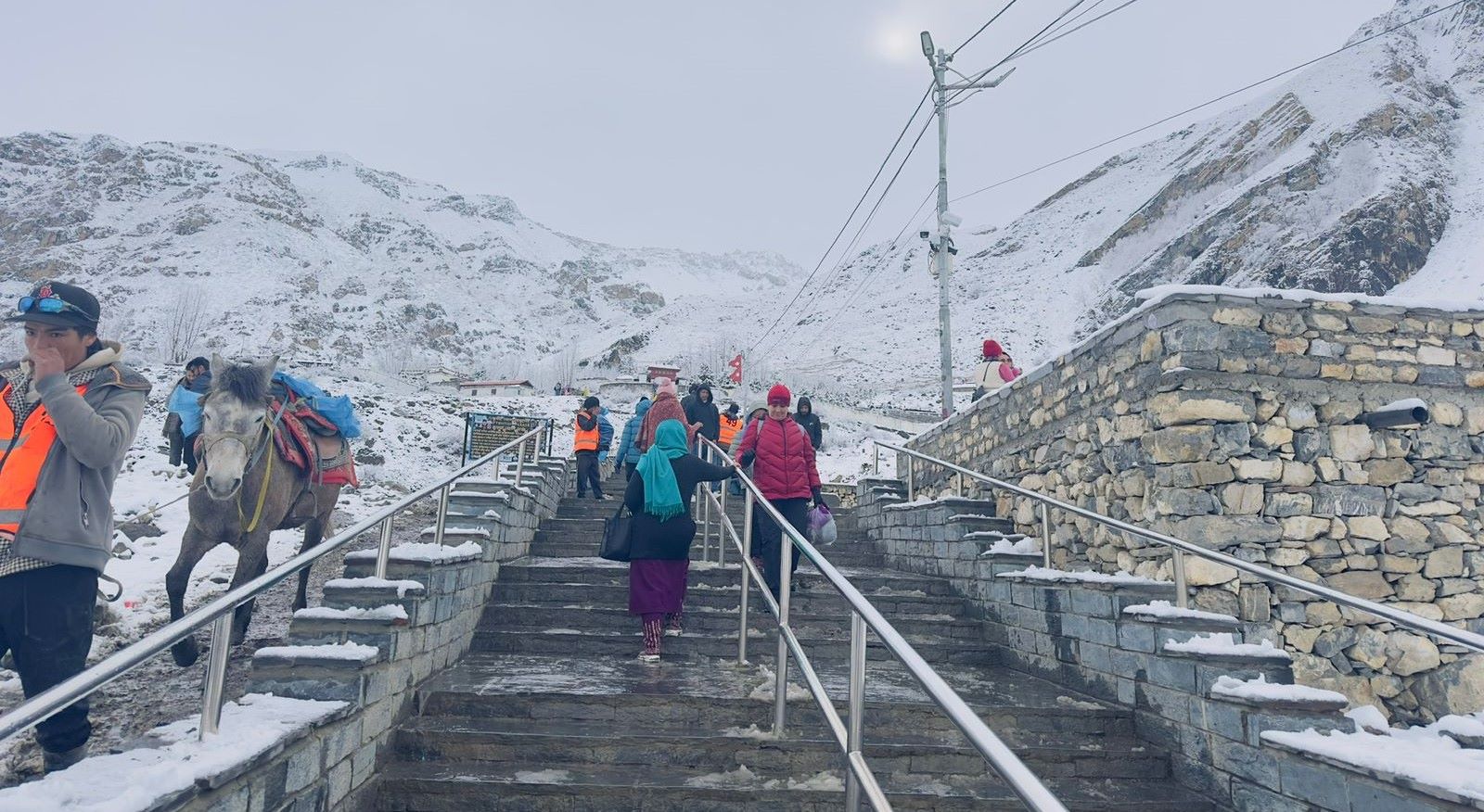
Dhorpatan 6 April: The second hunting season is currently underway in Dhorpatan, Baglung. During this season, foreign tourists are busy participating in hunting activities.
In Nepal’s only hunting reserve, Dhorpatan, foreign hunters are active in the high-altitude hunting blocks. According to Ranger Sagar Subedi, permits have been issued this year for hunting 14 blue sheep (Naur) and 10 Himalayan tahr (Jharal). During the second season, which runs from Falgun to Baisakh (February–May), some hunters are already engaged in hunting in Dhorpatan, while others are preparing to travel to Nepal.
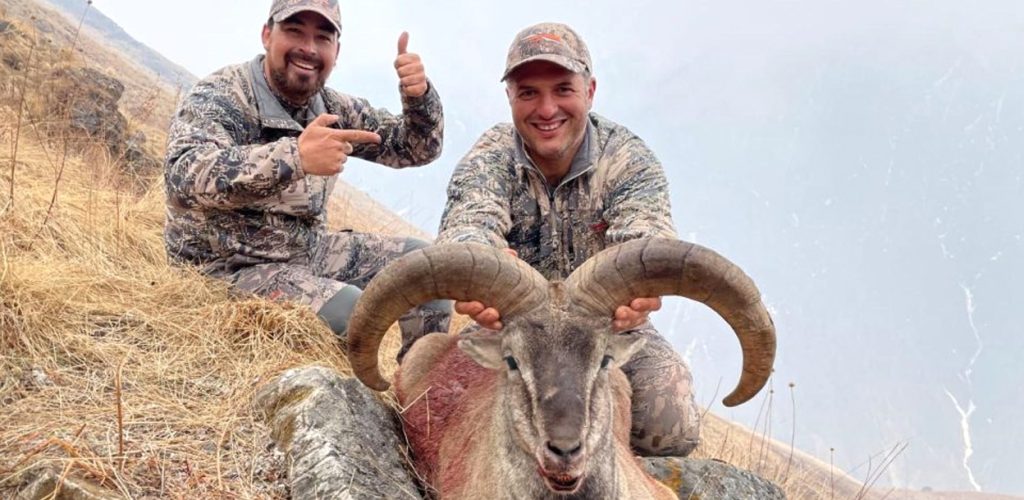
Ranger Subedi also stated that permission was granted this year to hunt 13 wild boars. The Dhorpatan Hunting Reserve has allowed hunting in various blocks with approval from the Department of Wildlife. Currently, an American citizen who came through Global Safari Pvt. Ltd. has already hunted one blue sheep and one Himalayan tahr and returned, while American and Danish hunters who arrived through Himalayan Safari Nepal are actively engaged in hunting.
Foreign hunters obtained permits for blue sheep and Himalayan tahr based on competitive bidding and payment of revenue. As the second hunting season is ongoing, reserve staff and the Nepal Army are actively deployed in the hunting blocks alongside the hunters.
During this season, a Danish citizen, through Himalayan Wildlife Outfitter, has received permission to hunt one blue sheep, one Himalayan tahr, and one wild boar in the Fagune block.
Similarly, through Open Nepal Wildlife Safari and Trek Pvt. Ltd., citizens from the United States, Belgium, and France have received permits to hunt three blue sheep, two Himalayan tahr, and one wild boar in the Sundaha and Seng blocks.
Likewise, through Nepal Travel Expedition Pvt. Ltd., Russian, African, and French hunters are preparing to arrive in Nepal to hunt three blue sheep, three Himalayan tahr, and three wild boars in the Ghustung block.
According to the Department of National Parks and Wildlife Conservation, hunting takes place in two phases each year: the first season from Ashoj to Mangsir (September–December) and the second season from Falgun to Baisakh (February–May). Hunting groups, including foreign hunters, must complete their activities within 15 days in the designated blocks.
Hunters stay in the जंगल (forest) and are allowed to hunt only within the specified time after entering the reserve. Dhorpatan has become an attractive destination for foreigners seeking adventure and thrilling hunting experiences.
The Department of National Parks and Wildlife Conservation announces quotas and revenue rates each season through electronic bidding.
Additionally, through Global Safaris Pvt. Ltd., American and Danish hunters have received permits to hunt four blue sheep, two Himalayan tahr, and four wild boars in the Sundaha and Dogadi blocks.
Through Himalayan Safaris Nepal, an American citizen received permission to hunt two blue sheep, one Himalayan tahr, and two wild boars, of which one blue sheep and one Himalayan tahr have already been hunted. According to Subedi, a Spanish citizen, through Trek and Dealers, has received permission to hunt one Himalayan tahr, one blue sheep, and one wild boar.
In the first hunting season of the current fiscal year, NPR 30.3 million in revenue was collected. As hunters continue to arrive during the second season, revenue collection is ongoing.
Hunters began arriving in Nepal from the second week of Falgun, bringing their equipment and logistics. Foreign hunters typically reach the hunting blocks directly by helicopter.
Established in 1987 (2044 BS), the hunting reserve spans Eastern Rukum, Baglung, and Myagdi districts, although its main office is located in the Dhorpatan Valley of Baglung.
During hunting activities, reserve staff and Nepali assistants accompany the foreign hunters. Each year, the department sets quotas for blue sheep and Himalayan tahr.
Considering the costs of permits, block reservations, licenses, helicopters, and logistics, each hunter typically spends around NPR 3 to 3.5 million.
This hunting opportunity, which is mainly preferred by wealthy foreigners, is not accessible to Nepali citizens. Since 2016 (2073 BS), the Nepal Army has been responsible for the security of the hunting reserve.