Kathmandu, 27 Feb: There has been a growing trend of threats and character assassination on social media whenever someone expresses views either in favor of or against a political party or candidate contesting in the elections. When individuals voice support or opposition on certain issues, men are often labeled as brokers or accused of being “bought,” while women face character attacks and even sexual harassment in the digital space. Such behavior has polluted the overall election environment.
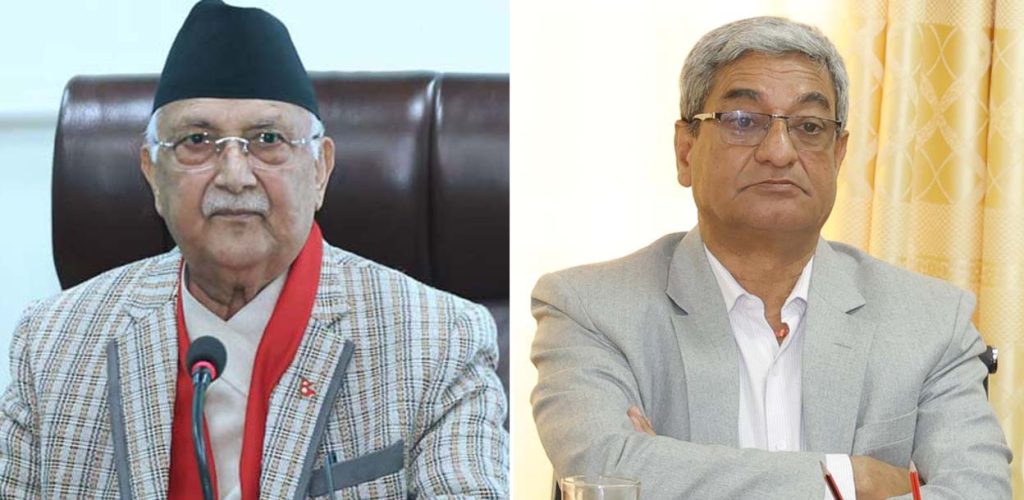
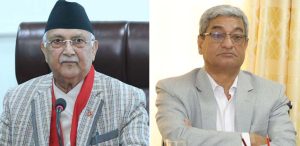
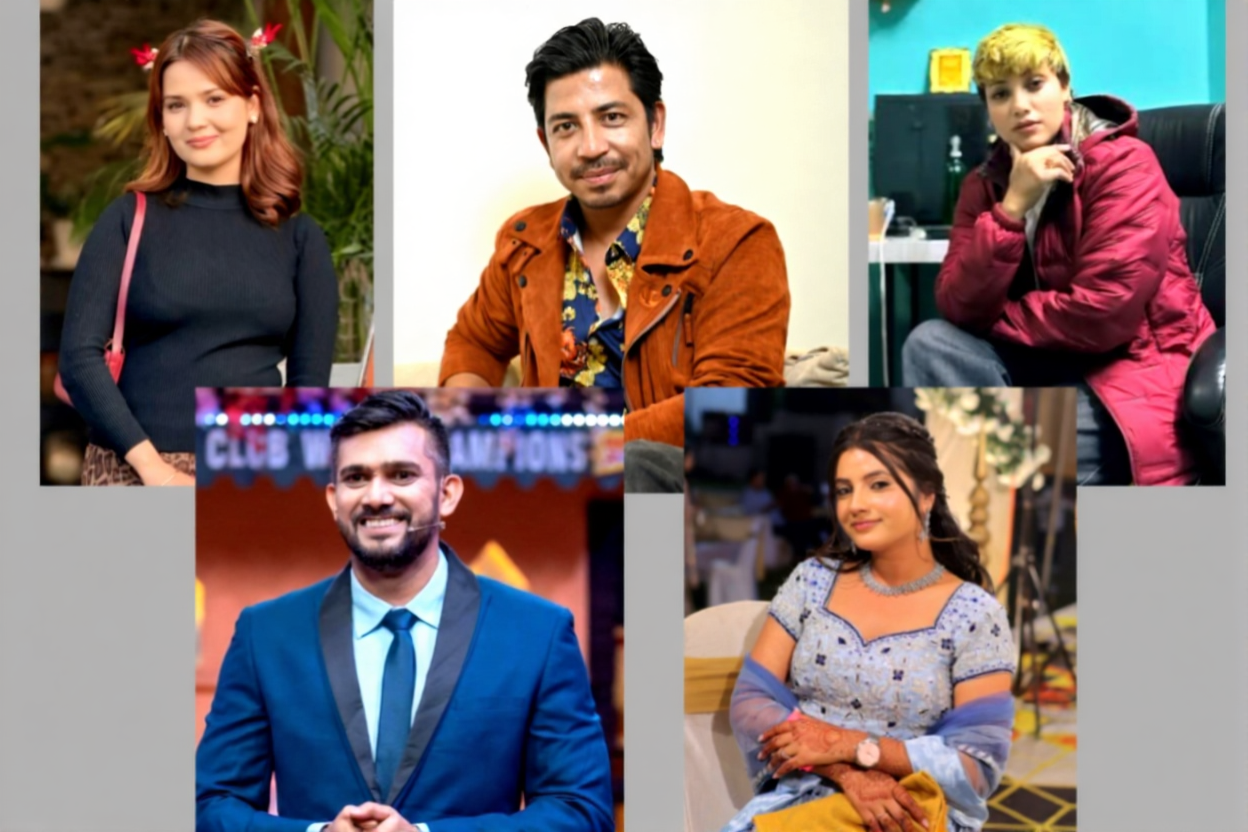
Recently, the 47th episode of the television program Comedy Nights with Champions has sparked widespread debate on social media. As soon as UML Secretary Mahesh Basnet appeared in the trailer broadcast on Sunday, abusive comments began targeting the show’s host and director, Bishal Bhandari. As online attacks intensified, Bhandari posted a status on social media warning that he would seek legal remedies.
After Bhandari shared the trailer on Facebook at 7 pm on Sunday, comments such as “Rest in peace, Brother Bishal Bhandari” and “Jhole” flooded in. Some even posted violent remarks, saying it was time to “skin Bishal Bhandari and lay him on the road.” Others threatened to protest and boycott all his future works if the program aired. Many users, including those displaying Nepal’s flag in their profiles, resorted to obscene insults involving his family members.
The Tuesday episode of the show also featured caricatures of Nepal Communist Party (NCP) Coordinator Pushpa Kamal Dahal and former Bharatpur Metropolitan City Mayor Renu Dahal. Objecting to the portrayal, the NCP-affiliated “Gen-Z Red Force Nepal” issued a statement condemning what it described as an attack on respected leaders and the communist movement.
Bhandari has stated that while criticism is part of democratic practice, personal insults and threats are unacceptable. He says the threats have slightly decreased after he announced he would pursue legal action.
Content Creators and Artists Targeted for Political Opinions
Content creator Suruchi Budhathoki has also faced social media hostility. During the Gen-Z movement, after Rastriya Swatantra Party (RSP) Chairperson Rabi Lamichhane was released from Nakkhu prison, she posted a video saying “Go Back Rabi Lamichhane.” She clarified that their protest was not intended to free any individual from jail and that using the movement’s cover for such purposes was wrong.
Following her statement, she was subjected to online abuse across Facebook, Reddit, and other platforms. The harassment extended beyond her, with her family photos circulated widely online. A page named “Troll Tollywood” posted a collage of her family photos labeling her a “Nepo Kid,” which later went viral through other pages such as “NEB Nepal.” Suruchi says that whenever she speaks in favor of a good candidate without aligning with a party, she is bombarded with questions like, “How much money did that party pay you?” She adds that seeing her parents’ photos spread online with insulting captions has deeply affected her mental health and made her fearful of speaking publicly.
Artist Naveena Silwal, popularly known as “Khuili,” also became a target after commenting on allegations linking RSP Chair Lamichhane to a cooperative fraud case. She says that asking political questions or criticizing leaders now leads to abusive language, character assassination, and even the spread of deepfake images. An edited photo combining her image with UML Chair KP Sharma Oli has been circulated with objectionable captions. Silwal is currently seeking legal remedy under cybercrime laws.
Singer Jyoti Magar was previously a victim of AI-generated manipulated images after a photo of her sitting beside Oli at a UML convention was altered to convey inappropriate meanings online.
Similarly, model and TikTok star Smarika Dhakal publicly apologized even before the release of a music video she acted in, fearing backlash because the song was associated with UML. She later told Kantipur that she only realized the political affiliation after makeup had already been done. Singer and actor Prakash Saput also faced trolling and calls for boycott after praising KP Sharma Oli during a book launch event titled “KP Sharma Oli: Dream, Struggle and Commitment.” His remarks led to online abuse targeting even his caste, and his film Basanta was reportedly affected by the controversy. Later, during a promotional event for the film Soltini, Saput admitted that his earlier praise of Oli was “a mistake.” He is currently a proportional representation candidate for RSP.
Threats to Democratic Dialogue in the Digital Age
Whether it is Smarika’s preemptive apology or the abuse directed at Bishal Bhandari, these incidents collectively send a clear message: social media is increasingly being misused to vent personal frustrations and spread hate.
Satire, criticism, and support are natural elements of democracy. Digital platforms provide an accessible space for expression. However, personal attacks, targeting family members, and creating and spreading obscene AI-generated images are contaminating political discourse. Although legal avenues exist, gathering evidence in cybercrime cases, navigating procedures, and judicial delays make it difficult for victims to receive timely relief.
Writer and civic activist Sanjeev Upreti says that because digital spaces often lack accountability and it is difficult to trace who is posting what and from where, online bullying has become a global phenomenon. He warns that such practices suppress dissenting views. He adds that discussions around caste, women’s rights, and patriarchy frequently provoke hate and anger online, leaving many afraid to speak and some even struggling with depression.
Santosh Sigdel, Executive Director of Digital Rights Nepal, notes that not only political activists but also ordinary citizens are increasingly afraid to express opinions on social media. While questioning candidates during elections should be normal democratic practice, some parties and candidates appear unwilling to tolerate scrutiny. Sigdel argues that unless political parties demonstrate readiness to listen to criticism and alternative views, democracy and an open society cannot thrive.
He further warns that if people become too fearful to speak online, democracy itself will be at risk. When individuals cannot openly declare support for a party or express political opinions, dialogue and questioning gradually disappear, increasing the danger of a leader-centric political system.