May 27, 2026 11:41 am
Category Not Found!
May 27, 2026 11:41 am

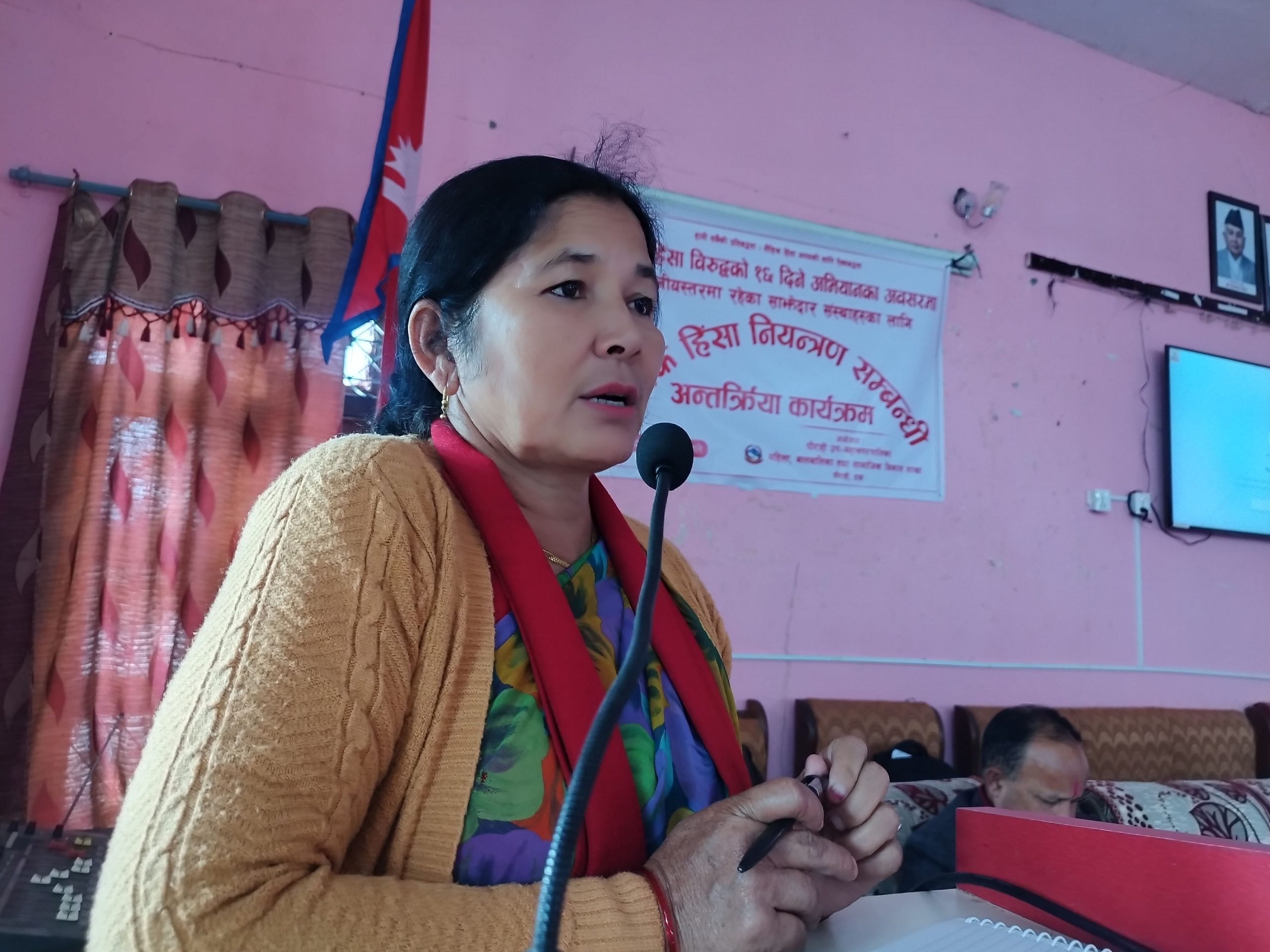
Deputy Chief DC-speech against gender-based violence

On the occasion of the 16-day campaign against gender-based violence held on Monday in Ghorahi, Dang, Humakumari DC, deputy head of Ghorahi sub-metropolitan municipality, gave a speech at the interaction for partner organizations at the local level. Photo: Ranjita Adhikari/RSS

The 16-day campaign against gender-based violence in Ghorahi, Dang, Nepal, was part of a global initiative running from November 25 (International Day for the Elimination of Violence Against Women) to December 10 (Human Rights Day). The campaign aims to raise awareness and take action to prevent violence against women and girls.

In Nepal, various activities were conducted as part of the campaign, including rallies, workshops, street dramas, and interactive sessions. These events involved local government representatives, civil society organizations, and the community. The focus was on empowering survivors, addressing discriminatory norms, and mobilizing stakeholders to strengthen protection mechanisms. Themes like “UNiTE! Activism to End Violence Against Women and Girls” were central to the efforts​.

Such campaigns also highlight the need for systemic changes, including better data collection, inclusive policies, and greater investment in resources for survivors. In Dang, as in other parts of Nepal, collaborative efforts between governmental and non-governmental organizations played a key role in these initiatives​.

The situation of sexual and gender minorities in Nepal, including transgender individuals and other non-binary groups, has seen progress in terms of legal recognition but still faces significant social, economic, and systemic challenges.

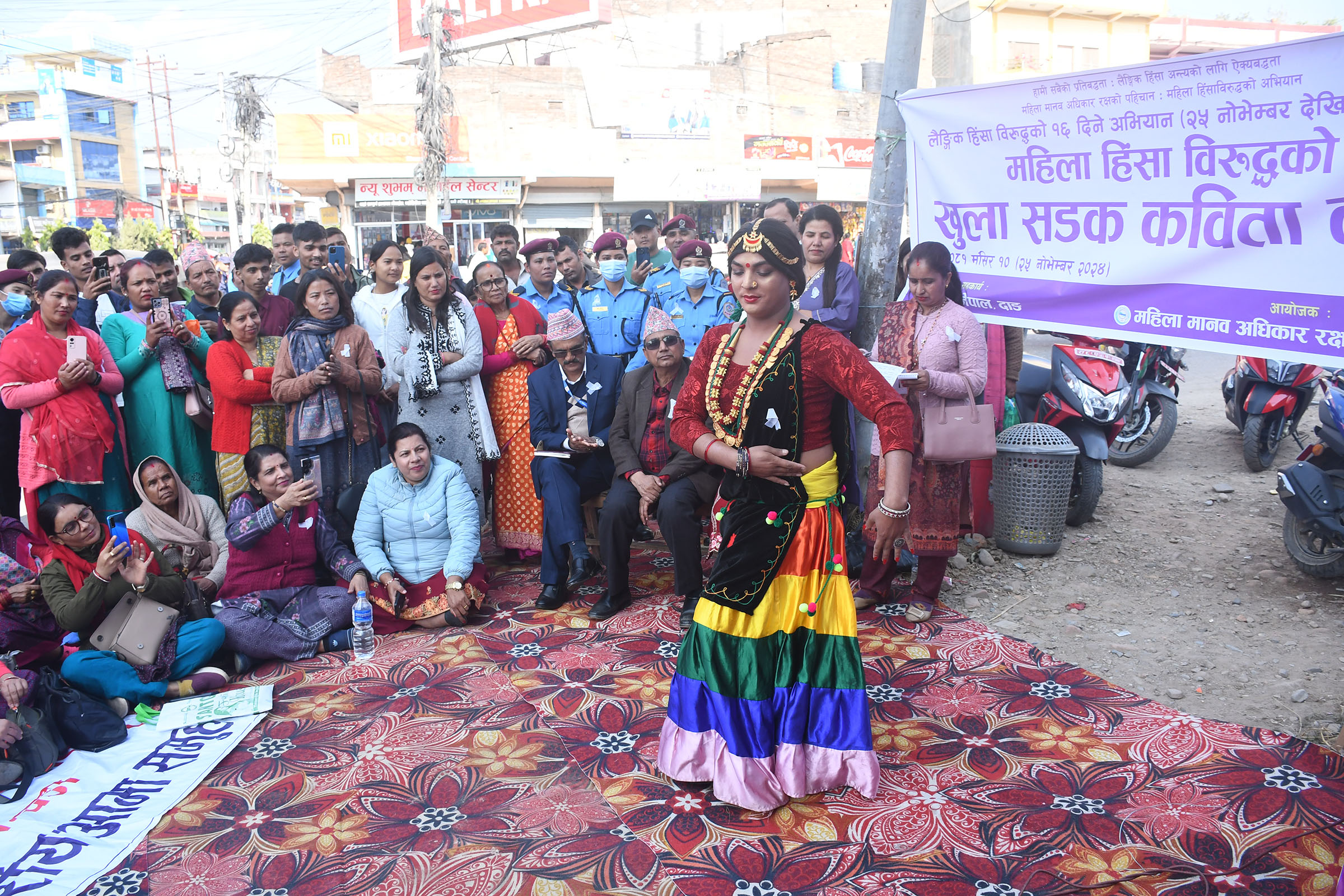
महिला मानव अधिकार रक्षक सञ्जाल दाङको आयोजनामा सोमबार घोराहीको भानुचोकमा भएको ‘महिला हिंसा विरुद्धको सडक कविता वाचन’ कार्यक्रममा नृत्य प्रस्तुत गर्दै यौनिक तथा लैङ्गिक अल्पसंख्यक । लैङ्गिक हिंसा विरुद्धको १६ दिने अभियानको पहिलो दिन अभियानमा ऐक्यबद्धताका लागि एकजुट हुने उद्देश्यले कविता वाचन कार्यक्रम गरिएको थियो । तस्बिर: कुलदीप न्यौपाने /रासस Sexual and gender minorities performing dance at the ‘street poetry reading against women’s violence’ program held at Bhanuchok in Ghorahi on Monday, organized by the Women’s Human Rights Defenders Network Dang. On the first day of the 16-day campaign against gender-based violence, a poetry reading program was held to unite for solidarity in the campaign. Photo: Kuldeep Neupane/Rss

Legal Recognition

  1. Constitutional Rights:
    Nepal’s 2015 Constitution recognizes gender minorities under the “Other” category, ensuring equal rights and protections against discrimination based on gender identity.

  2. Citizenship and Identity:
    Nepal allows individuals to register as a third gender on citizenship documents, passports, and voter IDs. However, bureaucratic hurdles often delay or complicate the process.

  3. Marriage and Family Rights:
    Same-sex marriages and full parental rights for gender minorities are not yet recognized, though there is ongoing advocacy for reforms.

Challenges Faced by Gender Minorities

  1. Social Discrimination:

    • Stigma and societal norms rooted in traditional beliefs lead to marginalization and ostracism.
    • Many gender minorities face rejection from their families and communities.
  2. Employment and Economic Inequality:

    • Employment opportunities are limited due to biases and stereotypes, often forcing individuals into informal or unsafe work environments.
    • A significant portion struggles with poverty and lack of financial independence.
  3. Access to Healthcare:

    • Gender minorities often face discrimination in healthcare facilities, leading to inadequate care.
    • Mental health issues are prevalent, exacerbated by societal rejection and stigma.
  4. Violence and Harassment:

    • Physical and emotional abuse, including sexual violence, is widespread.
    • Law enforcement often lacks sensitivity in handling cases involving gender minorities.

Advocacy and Progress

  1. LGBTIQ+ Organizations:
    Groups like the Blue Diamond Society (BDS) play a crucial role in advocating for rights, providing support, and raising awareness.

  2. Representation and Visibility:
    Increased visibility of gender minorities in media, politics, and public life is contributing to slowly changing perceptions.

  3. Education and Awareness:
    Schools and universities are beginning to include discussions on gender and sexual diversity, though these efforts are still in their infancy.

Steps Forward

To improve the situation for gender minorities, Nepal needs:

  • Stronger anti-discrimination laws and enforcement.
  • Greater social awareness through education and campaigns.
  • Comprehensive healthcare services tailored for gender minorities.
  • Recognition of same-sex partnerships and related rights.

While Nepal is considered progressive compared to many South Asian countries, the lived realities of gender minorities reveal a gap between policy and practice.

Picture of Phatam Bahadur Gurung

Phatam Bahadur Gurung

Recommendation

Did you miss it?

Latest Update

Login

Please Note:

  • You will need to register in order to leave a comment.
  • You can easily log in using your email, or through Google, Facebook, and Twitter.
  • If you prefer not to comment with your real name, you can change your display name and profile photo to any nickname of your choice. Feel free to comment; your real identity will remain confidential.
  • With registration, you can view a complete summary of your comments, replies, and likes/dislikes in your profile.