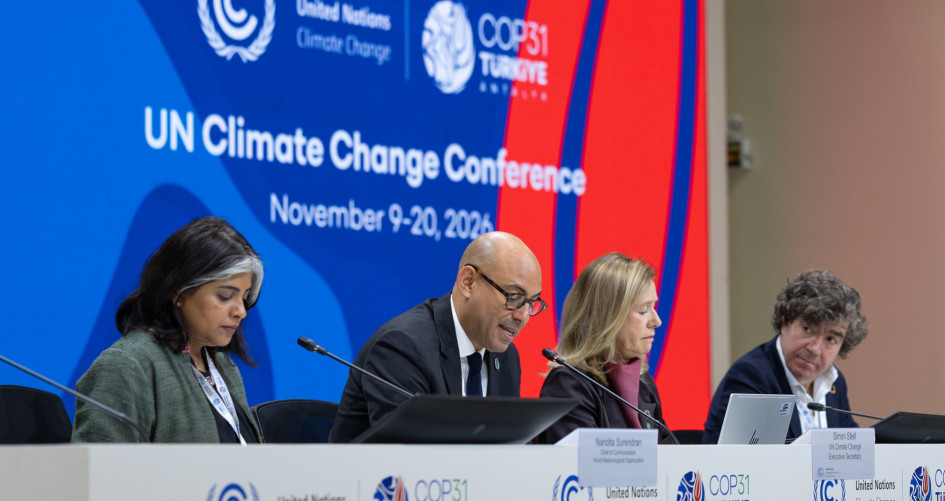
Turkiye- Climate change is intensifying a global health crisis as extreme heat, air pollution and climate-related disasters increasingly threaten human lives, health systems and infrastructure, climate and health experts have warned. Speaking at a press conference during the 31st United Nations Climate Change Conference (COP31) in Antalya, Türkiye, experts described the crisis as having reached pandemic proportions.
UN Climate Change Executive Secretary Simon Stiell warned that millions of people in South Asia are exposed to extreme heat, while record-breaking temperatures across the Northern Hemisphere this summer reportedly caused an estimated 50,000 deaths in Europe alone. He said climate change was becoming increasingly deadly, with a powerful El Niño potentially intensifying its impacts.
Stiell highlighted the growing health risks facing pregnant women, newborns and mothers, pointing to the continued use of coal, oil and gas, alongside deforestation, as major drivers of climate change. He emphasized that COP31 should focus on practical solutions that deliver direct benefits to people’s lives.
He also called for faster electrification and the expansion of clean energy, warning that countries must choose between embracing an electric future and continuing to expose households, businesses and health systems to rising fossil fuel costs. More than US$200 million has already been distributed through the Climate and Health Funders Coalition, with additional funding commitments announced during the conference.
World Meteorological Organization (WMO) Secretary-General Celeste Saulo said scientific evidence of climate change was undeniable, with the world experiencing unprecedented temperature records. According to the WMO’s 2026 State of the Climate report, the past 12 years have been the hottest on record.
Global average temperatures between January and September 2026 were approximately 1.47 degrees Celsius above pre-industrial levels. Saulo warned that the developing El Niño could push temperatures even higher, potentially contributing to new global heat records in 2027.
She also reported that ocean temperatures remained exceptionally high, with monthly records broken in 2026 and sea levels reaching unprecedented levels. Rising sea levels are increasing risks for approximately 900 million people living in coastal and low-lying areas.
Extreme heat, tropical cyclones, floods and droughts are becoming more severe, affecting millions across Asia, North America, South America and Africa. Disasters in China and Nepal have also demonstrated how hazards originating in mountainous regions can threaten downstream and coastal communities.
Despite these challenges, Saulo highlighted progress in early-warning systems. The number of countries reporting multi-hazard early-warning systems increased from 56 in 2015 to 136 in 2025. She urged governments to invest more in weather observations, scientific data and forecasting systems to protect vulnerable populations.
Meanwhile, Alan Dangour, Director of Climate and Health at Wellcome, said climate change was already affecting every region of the world. Citing the annual Lancet Countdown report, he noted that air pollution and extreme heat associated with fossil fuel consumption and human-induced climate change contribute to more than three million deaths annually.
He added that approximately 52 percent of the world’s land area experienced at least one month of extreme drought in 2025, threatening farmers, outdoor workers, food security and sanitation.
However, experts stressed that effective solutions are available. Dangour said at least 77 countries had reduced fossil-fuel-related air pollution, helping prevent more than 300,000 deaths annually. Clean energy, electrification, heatwave early-warning systems and investment in climate adaptation could save lives and reduce future economic losses.
Experts urged governments, businesses and philanthropic organizations to prioritize vulnerable groups, particularly children, pregnant women, outdoor workers and older people.
They concluded that human health must become a central priority in global climate negotiations, warning that the future of millions of lives depends on immediate action, stronger international cooperation and adequate climate financing.