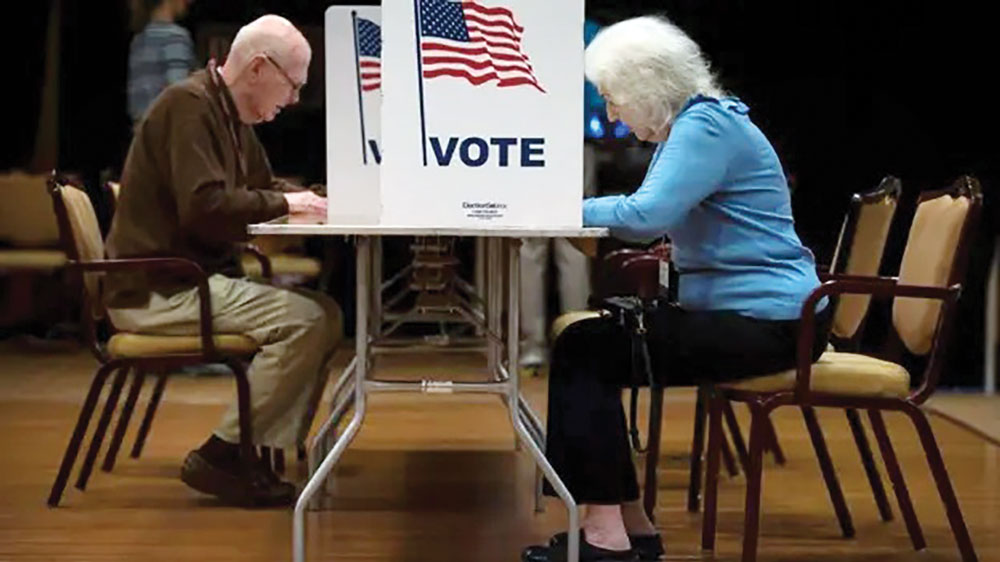
The opposition Democratic Party has secured majorities in both chambers of the US Congress in the midterm elections, while President Donald Trump’s ruling Republican Party has lost control of both houses. With this outcome, the Republicans’ dominance over the US legislature for the remaining two years of Trump’s presidency has come to an end, according to CNN, a US-based television network. The midterm elections were held on Tuesday.
The election results have created a situation in which President Trump will be compelled to work with the Democratic Party during the remaining two years of his presidency. Voters’ dissatisfaction with the rising cost of living caused by severe inflation, tariffs and the war with Iran has been reflected in the election outcome. Eighty-year-old President Trump said he would accept the election results and praised the Democrats for running a successful campaign. However, he rejected the idea that the Republicans’ defeat represented a personal setback for him.
The Democrats secured victories in several states, including Maine, Texas, Kansas, Iowa, South Carolina and North Carolina. In Maine, Troy Jackson defeated Republican Senator Susan Collins, while Keisha Lance Bottoms was elected Georgia’s first Black woman governor. With majorities in both chambers, the Democrats are now more likely to launch investigations into the Iran war, immigration policies and corruption allegations, as well as challenge Trump’s legislative proposals and government appointments.
President Trump, however, has warned that he would use his presidential veto power against bills passed by the Democrats. This has increased the likelihood of political tensions between the president and Congress over the next two years. Nevertheless, in an interview with The New York Times, Trump said he was fully prepared to accept the election results and indicated that some work could be accomplished through cooperation with the Democrats.
War and Inflation Behind Republican Defeat
President Trump has acknowledged that the war with Iran played a role in the Republican Party’s defeat in the midterm elections and congratulated the opposition Democratic Party. Admitting that the Iran war and rising oil prices had become unpopular among voters, he said the conflict was one of the factors influencing the election results. However, he maintained that voters understood the importance of his policy towards Iran.
President Trump also criticised Texas Governor Greg Abbott, commenting that he had been defeated because he was a Republican in name only.
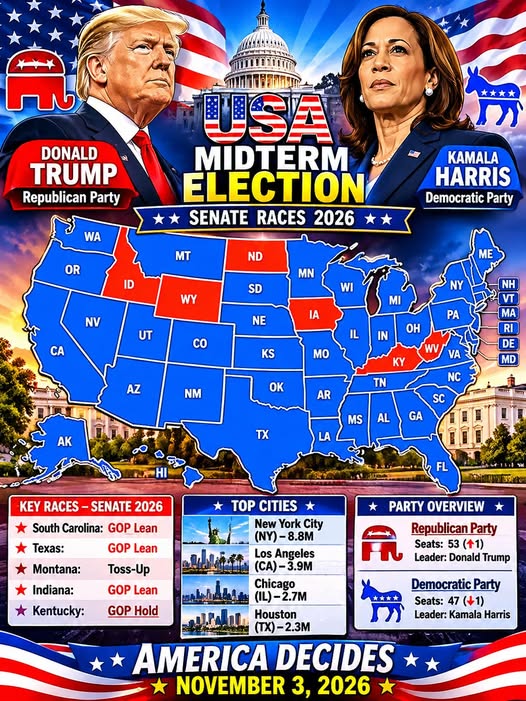
According to the Associated Press (AP), the Democratic Party has won 231 seats in the 435-member House of Representatives, surpassing the 218 seats required for a majority, while the Republicans have secured 139 seats. According to an NBC News analysis, the Democrats are projected to win at least 252 seats when the final results are announced.
In the 100-member Senate, where elections were held for 35 seats, the Democratic Party has secured a total of 54 seats, while the Republicans have won 44. The Democrats have strengthened their position in the Senate by winning several states traditionally considered Republican strongholds, including Texas, Ohio, Kansas, Iowa, Maine, North Carolina and South Carolina, securing an outright majority with 54 seats.
Historic Results in Gubernatorial Elections
The Democratic Party has also secured significant victories in gubernatorial elections across several states.
In Texas, Democrat Gina Hinojosa defeated Republican Greg Abbott, who had served three terms as governor, making her the first Democratic governor of the state since 1990.
Keisha Lance Bottoms has made history by becoming the first Black woman to be elected governor of Georgia. Meanwhile, Dr Amy Acton defeated Republican candidate Vivek Ramaswamy to become Ohio’s first female governor.
Former US President Barack Obama described his party’s sweeping victory as evidence that Americans wanted change.
Iranian Parliament Speaker and chief negotiator Mohammad Bagher Ghalibaf claimed that the American people had rejected the war through their votes.
How the US Midterm Elections Work
Members of the US House of Representatives serve two-year terms, senators serve six-year terms, and the president serves a four-year term.
Elections for all members of the House of Representatives are held every two years. At the same time, elections are conducted in the relevant states for approximately one-third of Senate seats, as the terms of those senators expire.
The elections held halfway through a president’s four-year term, or two years after the presidential election, are known as midterm elections.
In the United States, losing a majority in Congress does not automatically bring down the government. The president’s term is independent of congressional control. Therefore, the midterm election results do not shorten Trump’s regular presidential term.
Trump was elected to serve until January 2029, and the next presidential election will be held in November 2028.