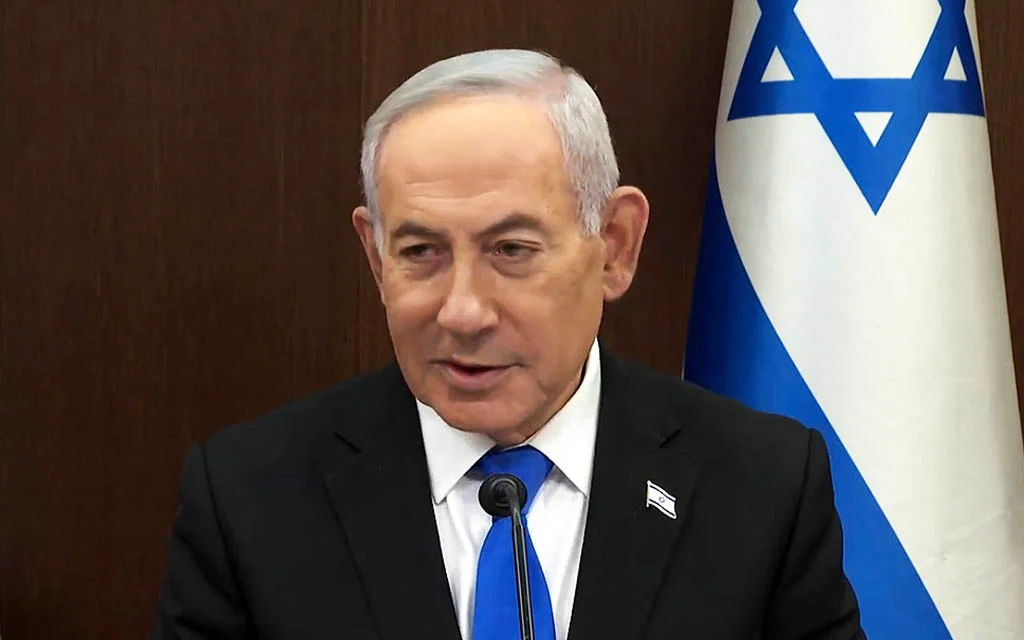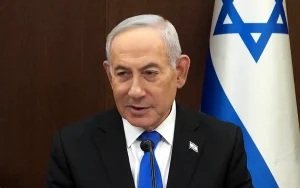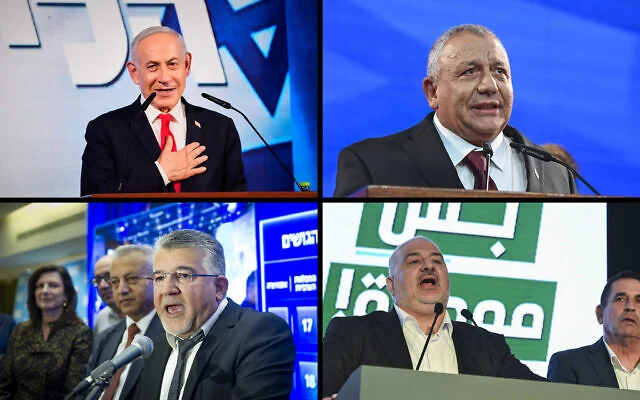
Israel’s Prime Minister Benjamin Netanyahu’s political bloc was leading the election count on Wednesday, but preliminary results showed that neither his camp nor the opposition had secured enough seats to form a government independently.
According to the Central Election Committee (CEC), with 89.8 percent of ballots counted, Netanyahu’s bloc was projected to win 53 seats in the 120-member Knesset, while the bloc led by Yashar party chairman Gadi Eisenkot was expected to secure 48 seats. Both fell short of the 61 seats required for a parliamentary majority.
The two predominantly Arab parties, the Joint List and Ra’am, were projected to win a combined 19 seats, marking a historic high. Their previous record was 15 seats. The result could give them a decisive role in determining the next government, following record turnout among Arab voters who largely sought to remove Netanyahu and his far-right allies from power.
The emerging results differed from most pre-election opinion polls, which had generally placed Eisenkot’s bloc ahead. Exit polls released by major broadcasters after voting ended on Tuesday also showed the opposition leading by two or three seats. However, the overnight count gradually shifted the advantage toward Netanyahu’s Likud party and its allies.
As of Wednesday afternoon, Likud was the largest party with 26 seats, followed by Yashar with 21. Naftali Bennett’s B’Yachad and Yousef Jabareen’s Joint List were each projected to win 12 seats.
The left-wing Democrats held eight seats, while Otzma Yehudit, Shas, United Torah Judaism, Ra’am and Avigdor Liberman’s Yisrael Beytenu each secured seven. Finance Minister Bezalel Smotrich’s Religious Zionism was projected to win six seats.
Two smaller parties failed to cross the 3.25 percent electoral threshold. Yoaz Hendel’s Reservists-Economic party received 2.63 percent of the vote, while Ofer Winter’s People of Israel received 1.61 percent.
Netanyahu’s bloc, comprising Likud and four allied parties, was eight seats short of a majority. Its projected 53 seats represented a significant decline from the 68 seats held by the bloc in the outgoing Knesset.
Eisenkot’s bloc remained 13 seats short of a majority. Although the Arab-led parties could potentially provide enough support to help the opposition form a government, several opposition members had ruled out cooperation with them.
Around 430,000 to 480,000 special double-envelope ballots, mainly cast by soldiers, prisoners and diplomats abroad, remained uncounted. Officials expected counting to conclude by Thursday evening, with final official results scheduled for November 4.
The outcome therefore pointed to a deeply divided political landscape, with coalition negotiations likely to determine who ultimately forms Israel’s next government.