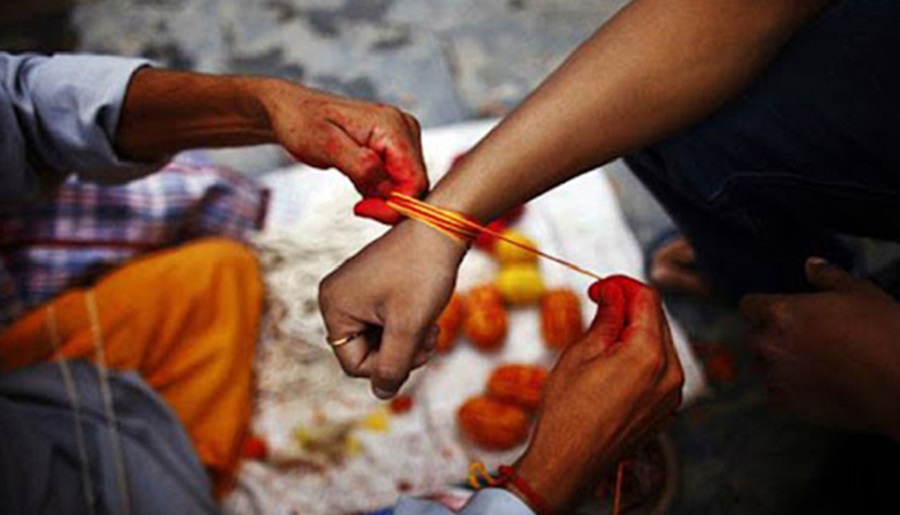
Kathmandu, 28 August: Janai Purnima, the festival of sacred thread and Raksha Bandhan, is being observed across the country on Friday. From early morning on the full moon day, followers of the Vedic Sanatan Hindu tradition traditionally visit rivers, lakes, ponds and other water bodies to bathe and have a sacred thread tied around their wrists by priests and religious teachers. Among those who wear the sacred thread, there is a religious belief that wearing a Yagyopavita (Janai) and Doro (Raksha Sutra) ritually sanctified and chanted over by a priest provides protection from negative forces.
Raksha Bandhan, or Doro, is a sacred thread that is consecrated through prayers, meditation and worship for human protection. Brahmin priests tie the thread around the right wrist of devotees while reciting traditional Vedic mantras.
According to religious scriptures, members of the three traditionally thread-wearing varnas—Brahmin, Kshatriya and Vaishya—are required to change their sacred thread on this day. For this purpose, they begin observing purification rituals from the 14th day of the bright fortnight of Shrawan by shaving their heads, eating only one meal a day and maintaining ritual purity. On the full moon day, those observing the ritual fast visit ponds, lakes, rivers and sacred water sources early in the morning and bathe after applying cow dung, ashes, sacred grass and soil from seven sacred places.
After bathing, they offer Tarpan (ritual offerings of water) to the sages using barley, sesame seeds and Kusha grass, and replace their old Janai with a new one sanctified through the Vedic Rudrabhishek ritual. The day is also known as Rishi Tarpani because devotees worship and offer Tarpan to eight sages—Kashyapa, Atri, Bharadwaja, Vishwamitra, Gautama, Jamadagni, Vashishtha and Agastya—along with Arundhati.
According to the Vedic guru tradition, the Yagyopavita, or Janai, is also known as the Brahma Sutra or the thread of knowledge. From early morning, devotees gather at temples and religious sites across the country to have the Raksha Sutra tied and replace their sacred threads. In Kathmandu Valley, large numbers of devotees visit the Pashupatinath Temple area, Ashok Binayak at Basantapur and the banks of the Bagmati River, among other religious sites.
On Janai Purnima, people traditionally eat Kwati, a nutritious soup made by soaking and sprouting a mixture of 11 different types of beans and legumes. According to religious and Ayurvedic beliefs, eating Kwati helps protect the body from illness, cleanses the digestive system and removes the cold accumulated in the body during the monsoon farming season, helping generate warmth from within.
Ayurvedic physicians say that consuming Kwati soup made from a mixture of different legumes can help strengthen the body’s immune system. It is also traditionally believed to help relieve ailments such as colds and coughs caused by exposure to cold weather.
In Nepal’s Terai region, the festival is celebrated by sisters tying Rakhi around their brothers’ wrists. There is a social belief that the tradition strengthens the bond of love and affection between brothers and sisters. The custom has increasingly spread to the hill regions as well.
Fairs are held from early morning on the full moon day of Shrawan at various lakes, ponds and sacred water sites across the country. These include Manichud in the northeastern part of Kathmandu, Gosainkunda in Rasuwa, Kumbheshwar in Lalitpur, Panch Pokhari in Sindhupalchok, Janakpurdham, Dhanush Sagar and Ganga Sagar in Dhanusha, Dansadhu in Jumla, and Trivenidham in Nawalparasi, among others.