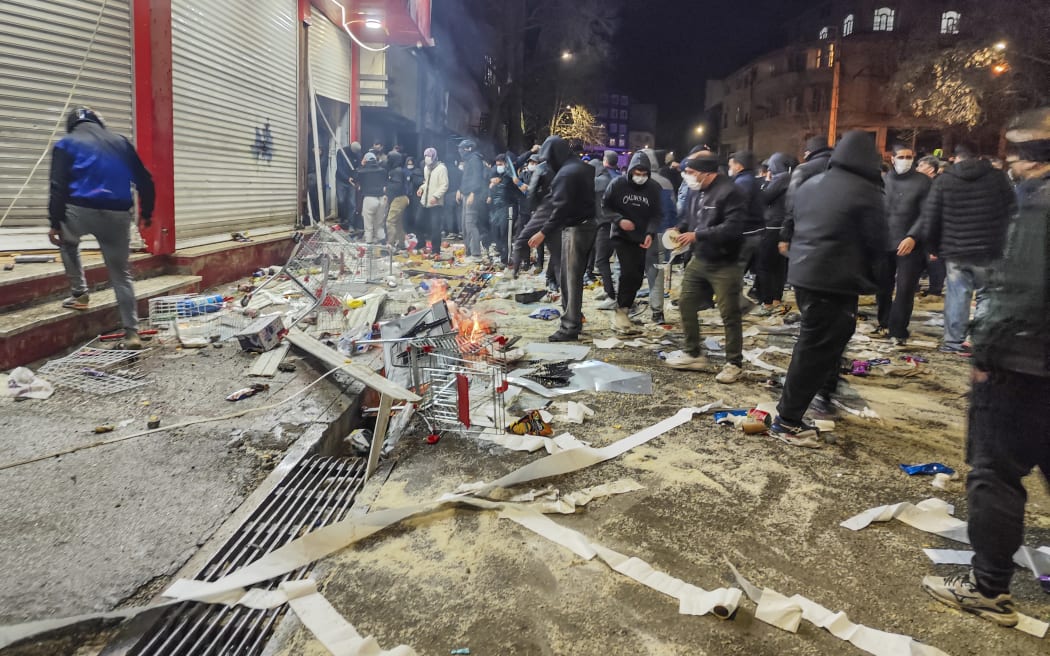
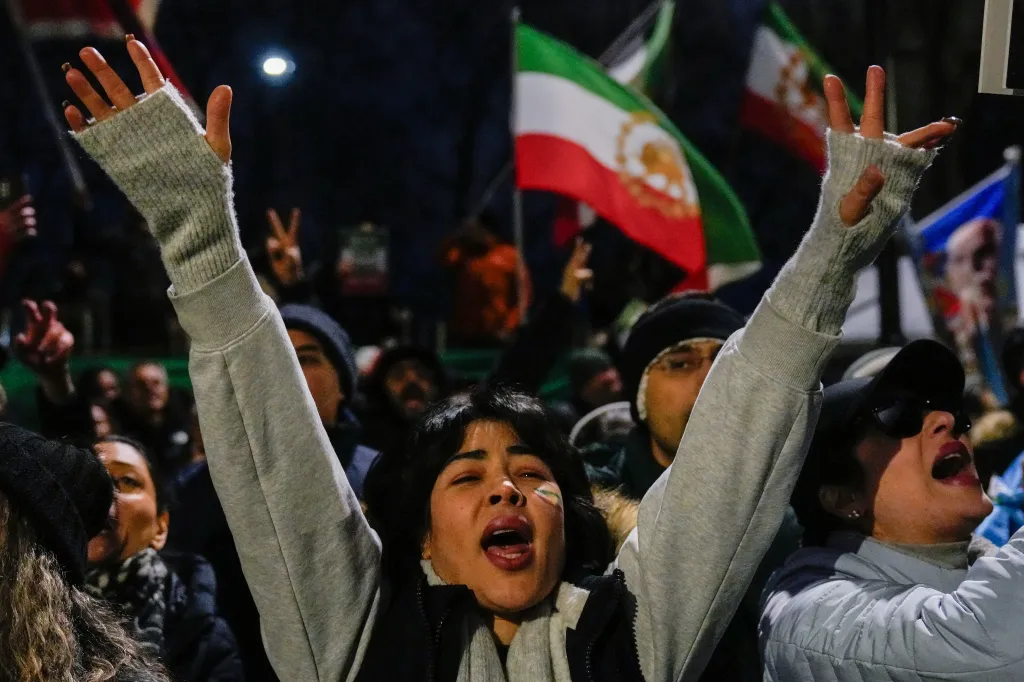
Protests have been taking place across Iran for the past several days due to the country’s deteriorating economic situation and rising inflation. The unrest began on 28 December 2025. According to Time Magazine, citing a doctor in Tehran, at least 217 protesters have been confirmed dead in just six hospitals in the capital, most of them reportedly killed by gunfire.
The BBC confirmed that on Friday night alone, 70 bodies were brought to a single hospital in the city of Rasht. International media reports say the protests are becoming increasingly violent and widespread. Reports from Iran indicate that hundreds of people have been killed or injured in security force crackdowns over the past four days.
Staff at three hospitals said they are overwhelmed by the number of injured patients.
Authorities have warned protesters that they could be labeled as committing “crimes against God,” an offense in Iran that can carry the death penalty.
Security forces opened fire in multiple locations on Thursday night after protests intensified, and operations have continued since then.
Meanwhile, an official from the Revolutionary Guards, speaking on state television, warned parents to keep their children away from protests, stating that they should not complain if their children are shot.
Government Using Full Force
According to reports, the government is using all its power to suppress the protests. In the early days, it was unclear how the government would respond. Even an anti-riot police officer reportedly admitted that security forces were initially confused.
What would happen next was uncertain, but graphic images and harsh rhetoric released on Friday made it clear that the government is now using full force.
Earlier, the government had nearly shut down internet and phone services nationwide.
Meanwhile, US President Donald Trump warned that the Iranian government would have to pay a heavy price if protesters were killed.
Experts Fear Further Brutal Crackdowns
Experts say that since the protests have spread into middle-class neighborhoods, the government will not hesitate to carry out brutal crackdowns. They estimate that the death toll could rise further in the coming days.
Iran is already grappling with conflict with Israel, international sanctions, a failing economy, and shortages of electricity and water. There are also internal divisions within the government.
President Masoud Pezeshkian has publicly taken a softer stance, but many of his ministers favor harsh measures. The government has accused the United States and Israel of instigating the protests.
Some protesters have been chanting slogans in support of Reza Pahlavi, the son of Iran’s former king, who has called for intensifying protests from abroad.
Protests have also erupted in Kurdish regions, with many demonstrators saying they have nothing left to lose.
Inflation Fuels Nationwide Anger
Rising inflation has fueled widespread anger, particularly among Generation Z. The main cause is economic collapse. In December 2025, Iran’s currency, the rial, fell to a historic low of approximately 1.45 million rials per US dollar.
Since the beginning of the year, the rial has lost nearly half its value. Inflation has reached extreme levels, with food prices rising by 72 percent and medicine prices by up to 50 percent. Public anger intensified further after the government proposed a 62 percent tax increase in the 2026 budget.
Khamenei’s Appeal: “Do Not Destroy the Country to Please Trump”
Iran’s Supreme Leader Ayatollah Ali Khamenei addressed the nation on Friday for the first time since the protests began. His speech was broadcast on state television.
Khamenei said Iran would not tolerate “mercenaries working for foreign powers.” He claimed that foreign agents were behind the protests and were fueling violence.
He said certain vandals were damaging public property to please the US president. However, he asserted that a united Iranian people would defeat all enemies.
Khamenei urged Donald Trump to focus on his own country’s problems instead of interfering in Iran’s affairs. He added:
“The Islamic Republic came to power through the blood of hundreds of thousands of great people. Those who seek to destroy us should know that the Islamic Republic will never retreat.”
Crown Prince Says He Is Preparing to Return
Iran’s Crown Prince Reza Pahlavi announced that he is preparing to return to Iran to join the ongoing protests. The 65-year-old has lived in exile in the United States for nearly 50 years.
In a social media post, Pahlavi wrote:
“I am preparing to return to my country so that, at the moment of victory of our national revolution, I can stand with all of you among the great people of Iran. I firmly believe that this day is very near.”
Demand to Hand Over Power to the Crown Prince
After the 1979 Islamic Revolution, Ayatollah Ruhollah Khomeini came to power and served as Supreme Leader until 1989. He was succeeded by Ayatollah Ali Khamenei, who has ruled for 37 years.
Today, Iran faces severe challenges, including economic crisis, runaway inflation, international sanctions, unemployment, and recurring mass protests. After 47 years, many Iranians—frustrated by economic hardship and strict religious rule—are demanding change.
As a result, calls are growing for Reza Pahlavi to assume power. Protesters view him as a secular and democratic alternative, especially among younger generations, who believe his return could bring economic stability, global acceptance, and personal freedoms.
Oil-Dependent Economy
In 2024, Iran’s total exports stood at approximately USD 22.18 billion, with oil and petrochemicals making up the majority. Imports totaled USD 34.65 billion, resulting in a trade deficit of USD 12.47 billion.
In 2025, due to declining oil exports and sanctions, the deficit increased to USD 15 billion. Iran exports 90 percent of its oil to China.
GDP growth for 2025 is estimated at only 0.3 percent. Without sanctions relief or the revival of the nuclear deal, stabilizing trade and the rial remains highly unlikely.